Showing posts with label Problems. Show all posts

Friday, December 27, 2013

On the Closing of the Blog

I hope everyone's Christmas was splendid! Ours was great spending time with two of the four kids and a few of the grandchilden. Be safe next week! As for me I've been busy working on the farm moving some of my trees and other plants as I am able to. More on that soon enough. 
Lately I have been rather distressed about the use of the photos from this blog on other websites, namely commercial websites. So I closed the blog thinking that would fix the problem but it has not and I thought I'd explain that situation today. Most of the websites using the photos from this blog have out of the country addresses and despite contacting the appropriate authorities about getting the photographs removed from the websites, I have had little luck. I was able to get the search results deleted by Google when I filed a complaint with them and I pursued the matter enough that for the most part I am somewhat satisfied. I can honestly say that in a few cases Google actually investigated and took action. Yahoo, one small victory in the war.

Pictures lifted and posted elsewhere include things ranging from my above ground swimming pool all the way to a simple picture of a patio in progress. These pictures were lifted and posted on commercial websites to sell products. In one case the webmaster took one of the pictures and used it twice on a website based out of North Carolina selling paving material like crushed stone, in another case the picture was used multiple times over and over again to sell things. The whole situation is ridiculous. I know webmasters probably don't take their own pictures to use on others websites but geez, at least ask if you can use the picture before compiling a website! Or, if you must, take a picture from a web page where there is NO notice stating pictures are not allowed to be used elsewhere. 

The problem with closing the blog is that the pictures are still available for people to see. I am not sure why since I publish all of my pictures as private. I guess that the pictures are on some kind of image search. You can see the pictures when you go to visit the page even though the blog is closed, the search engine shows a cached version of the webpage. Why????? I would think the pictures AND blog would remain unavailable unless you came to the actual blog posting and the blog was open--not closed--but that does not seem to be the case. 

The other complication with closing the blog is that when I file a DMCA (Digital Millenium Copyright Act) complaint--I almost always will file--I must show the original picture I claim to be mine. Each picture uploaded to the Internet is date and time stamped so when someone steals a photograph from a website (the original website), that original photograph will always be date time stamped earlier than the stolen photograph. I cannot remove the photographs from the blog because then I would not be able to prove they are mine when I file a complaint. I realized that getting the photographs off from other websites was going to be a problem so I hoped that closing the blog would at least eliminate new thefts, but it did not. All of this is a bit stressful to say the least.

I realize bloggers and photographers and numerous folks get their photographs stolen from websites each day and I understand this to a certain extent. But when I found that Google back image search and realized just what kind of websites and how many took liberties with the pictures found here, I guess I just kind of got really mad. Then when I was not able to get the images removed like usual, I got even madder and began to regret ever getting on the Internet. It seems people think that if an image is on the Internet it then becomes everyone else's image. This is surely not the actual truth but try convincing the hoards that like to believe this. Ha! Not an easy feat by any means but I still try, one person at a time. 

The Google back image search allows me to drop an actual photograph from this blog into the search bar and it will then show me all the websites that contain that particular photograph. Most website owners take photographs maybe innocently enough, maybe not, maybe they think the original owner will never discover the theft, I'm not sure why they take others photographs but when confronted they will usually do the right thing and immediately remove the photograph. I am okay with that situation. But then there are the website owners that are masked and protected by pass through hosting organizations who refuse to help or get involved. These website owners are very crafty and in the market of making money--off from others work. I am not content to let this issue go. I just can't see allowing this kind of use of the photographs that are posted here. I am simply a lay person who likes to share my experiences with gardening with others and I am not sure that chasing down those ideas and photographs from unscrupulous abusers are really worth it to me. I have even contemplated not blogging anymore. They win, no doubt. 

 One note on Pinterest. Despite a clear notice stating NO pinterest from this blog those folks either can't read or don't care because I still find photographs lifted from here and posted to Pinterest. That situation continues to be a thorn in my side. The pinners usually download them and then upload them or just take them from the Google image search. The good news about Pinterest tho, that the other websites I have been dealing with don' t have, is that Pinterest has a procedure in place to correct the problem of lifted photographs and I do take action each and every time I find this blog's photographs on Pinterest. I am not interested in traffic and neither is Skeeter. Sometimes that is the reasoning behind allowing photographs to be pinned on Pinterest, but no thanks!! I don't need or want those kinds of visits. I am interested in talking with others and learning from others and with keeping a photographic scrapbook of my gardening endeavors. Talking and sharing with others does not mean it's okay to take the photographs. I feel very strongly about this particular matter and I apologize if I offend anyone who has innocently enough used other people's photographs and who might be reading this post.

As an alternative to not blogging I have explored ways to stop successful downloading of photographs from here. It is just that those methods such as slicing and dicing and adding a transparent photo over the original photo are really rather time consuming and since I blog for fun, taking all of those measures will surely not make blogging all that fun for me.  So I guess for now I will simply try to use smaller photographs and maybe photographs I hope others are not looking for hoping to frustrate commercial website owners; I will post fewer pictures; and I guess I will take it day by day and see how it goes as I work for better methods to ensure this blog stays intact-on this blog....

in the garden....


Words and Photos Property of In the Garden Blog Team, In the Garden

Monday, June 25, 2012

Bleach, Fountains, and Plants Do Not Mix Well


DSCN3128
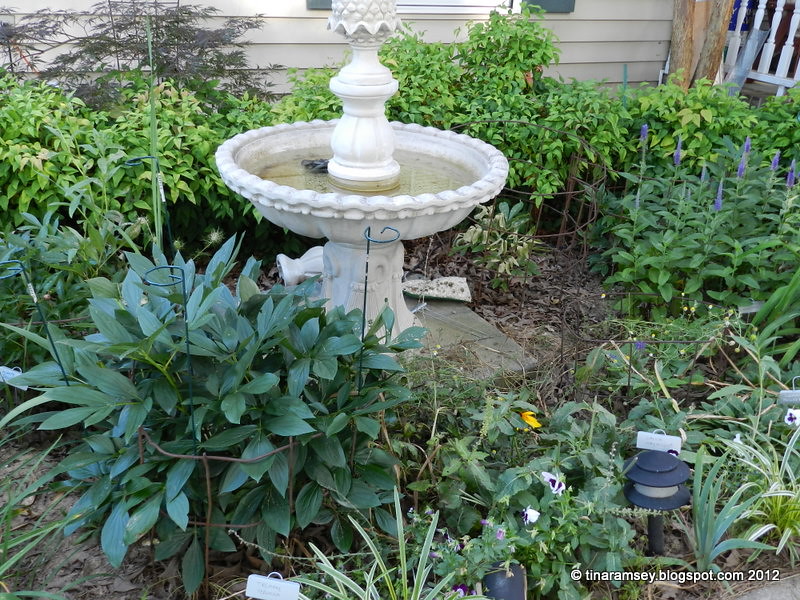
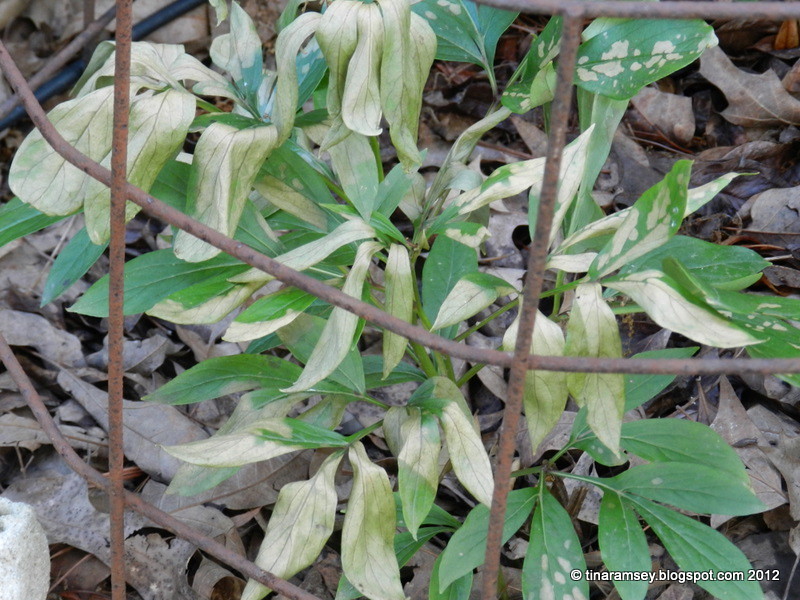
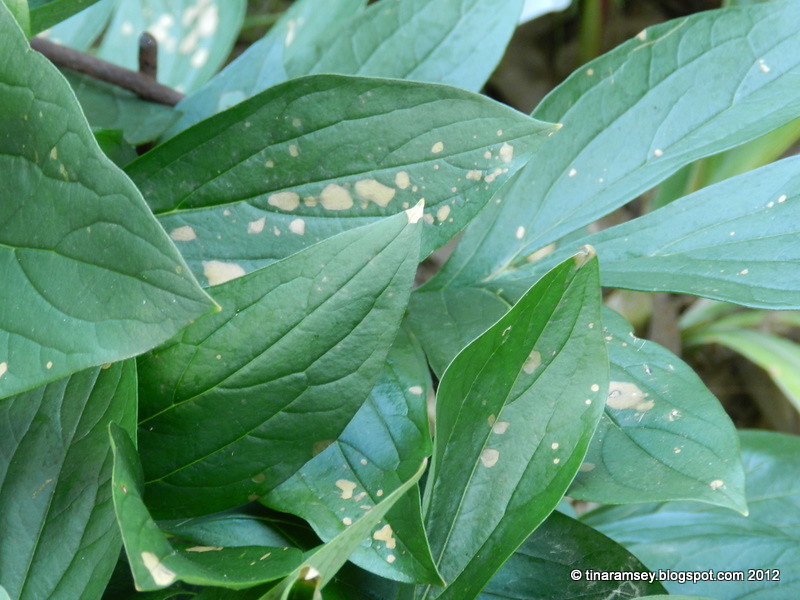
During the recent garden tour in Montgomery County I thought it would be nice to turn on my circulating fountain for ambiance in the garden as visitors strolled around. In preparation for circulating the water I added a bit of bleach to the water to clean it and clarify it a bit. The water circulated all day and splished and splashed like water fountains do and it was nice. It was nice until about one week later  when I noticed damage to the nearby plants.
DSCN3127
It seems these peonies were very sensitive to the bleach in the water even though the bleach was very diluted. I had no idea this problem could happen but have learned a valuable lesson-no bleach in the fountain when splashing is possible (it's almost always possible with fountains).
DSCN3126
Fortunately these peonies will survive and live to grow and bloom another year. For now I have left the situation alone other than to cut out dead parts of the plant....


in the garden.....

Similar experiences? 

Words and Photos Property of In the Garden Blog Team, In the Garden

Monday, March 19, 2012

All Is Not Well With the Birds

DSCN1404

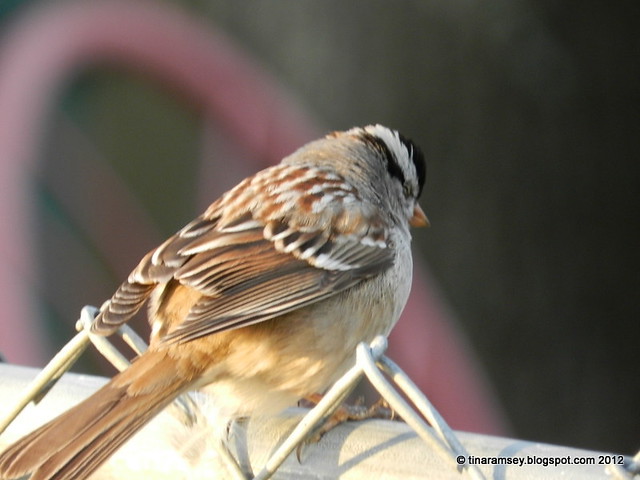
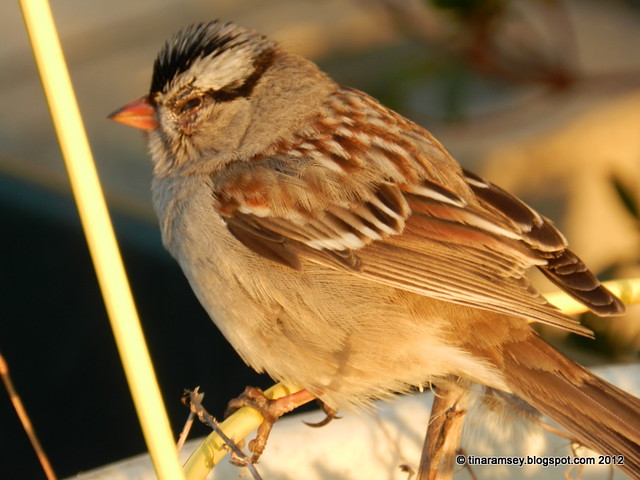
At first glance the above picture seems like all is well. The picture depicts just another white crowned sparrow hanging out.
DSCN1396
But when we look closer we see the sparrow's eyes are covered with what appears to be an infection of some kind; probably house finch disease. House finch disease is not a disease at all but primarily a respiratory infection. Like all respiratory infections this infection can spread like wildfire among birds. It is best to remove feeders for a while to keep the birds from congregating and spreading the germ between each other. I don't feed the birds in the regular sense so I was rather surprised to see this sick bird. It did not live more than a few minutes after I took its picture. My dog Lady, who is always a hunter, quickly ended the bird's suffering. The bird could not see. Without vision birds are helpless even if predators are not around. It's always sad seeing this in nature....


in the garden....


Words and Photos Property of In the Garden Blog Team, In the Garden
Wednesday, October 26, 2011

This is NOT the Fall Color You Want to See in Your Garden

100_4189
I have been growing 'Hicksii' yews for eight years now. I purchased the little evergreen shrubs in three gallon pots for what I thought was quite a significant price in 2003 (approximately $25 per pot). The eight shrubs were to be used as a privacy screen between my neighbor's home and one of my gardens. I planted them in full to part sun and in a good soil area that was not waterlogged or overly dry. The shrubs grew in a pleasing manner and even bore some berries for me in some years (all berries from yews are poisonous) then just this spring I started noticing some foliage turning brown. Uh oh. I was a bit worried but simply cut out the brown limbs and hoped for the best. As spring progressed the first two shrubs that displayed brown foliage continued to turn completely brown and had to be removed. Removing the shrubs was a big job and took a lot of might but remove them I did and replace them with something more fun. The yew pictured above is not one of the ones I removed in the spring. So far this yew is fairly healthy but right next to it is another yew that is changing its color-and it is not a welcome fall change of color.
100_4188


I fear this shrub will need to be removed soon and it is a job I am not looking forward to completing. At first I thought perhaps the shrubs had been over exposed or suffered freeze damage in the spring when the problem first surfaced but then the rest of the shrubs began turning brown. I knew at this point all of the 'Hicksii' yews were doomed. I searched high and low in books and on the web for any possible information about why 'Hicksii' yews might die. The information I found was scanty at best. It seems that generally yews grow well in my part of the states in many varied conditions so I was and am still at a loss as to why these 'Hicksii' yews died. I checked for spider mites and saw no evidence of them though I may have missed the signs. Drainage could possibly be a problem as could the drought we had last summer and this year. Then again it could be the heat and humidity but I honestly don't know why the yews died. Does anyone have any experience with this happening to yews? I know one thing, I will not waste my time on these rather pricey shrubs again.....


in the garden....
Words and Photos Property of In the Garden Blog Team, In the Garden
Monday, May 30, 2011

I Get So Frustrated By the Birds!

100_2841

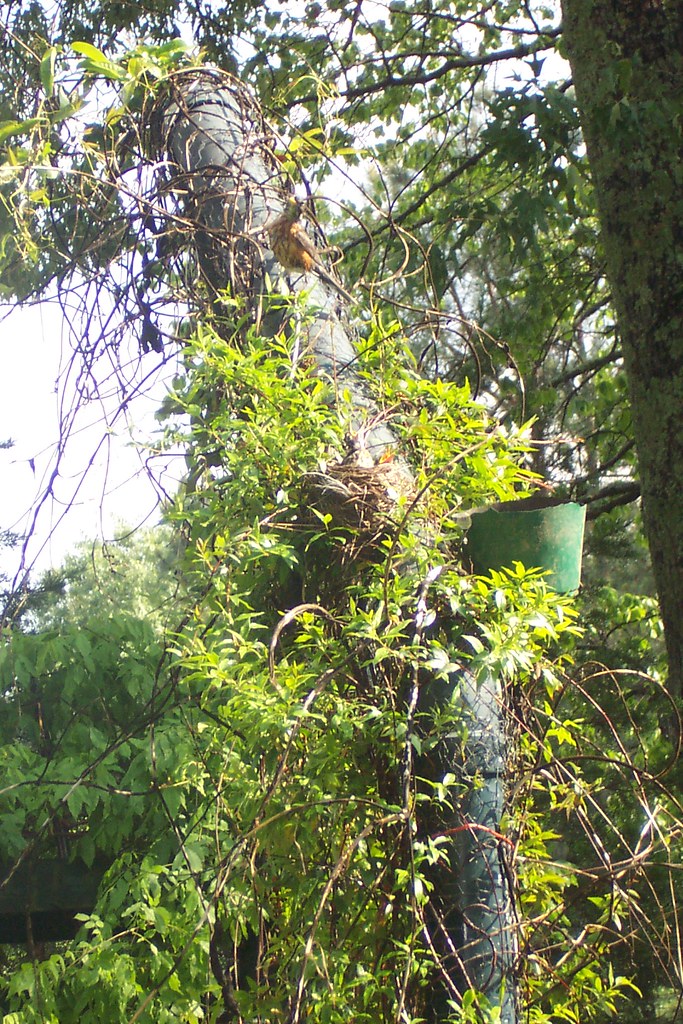
Our home and garden are bird and wildlife friendly. Probably the garden is more wildlife friendly than we'd like because we are overrun with squirrels and chipmunks. We do like the birds but along with the great amount of birds comes problems. In any population there is a natural order to living and dying. If you don't have a lot of birds in your yard you may not notice the dying part but here in Tiger Gardens we have a LOT of birds and a lot of baby birds. Many are the dead kind. Some fall from nests, predators get others, but still others do well. Recently we had a difficult situation with some robins. 


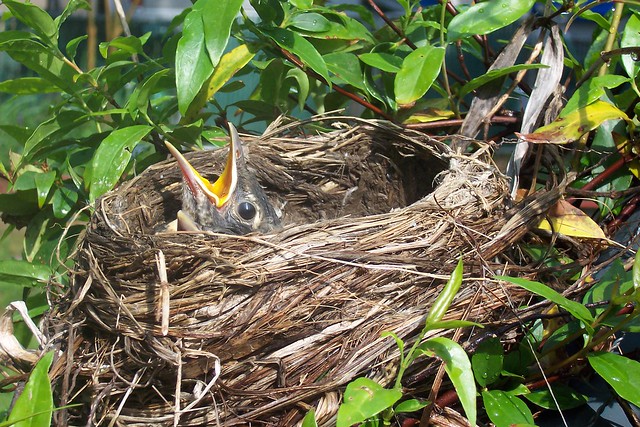
Mr. Fix-it took his truck downtown and while downtown shopping he heard a bird chirping at him. He looked in the bed of his truck and what should he see but a baby robin. Poor thing. It happened to be raining and hailing at the time. He called me and asked what he should do. I knew the robins around the garden were in the fledgling stage so I had a pretty good idea what kind of bird it was and where it came from. It seems I may have been wrong on where it came from but at any rate back to the story.


100_2840


Mr. Fix-it took the baby robin into the cab of his truck and gently placed it in a box for safe keeping until he could get home. I figured this baby came from this robin's nest on top of my PVC arbor. It took but a few minutes to get out the ladder and climb up to place the bird back in its nest with its two siblings. The problem was that the silly baby bird was not going to cooperate. Normally baby birds are trained well to hide and stay quiet unless their parents are around. This baby bird, having been out of the nest and hungry, wasn't having any part of staying put and being quiet. It quickly jumped out of the nest and fell down the gelsemium vine along the arbor-not once but twice!


100_2839


That's when I came up with the brilliant idea to make it a nest of its own and place the new 'nest' next to the robin's nest. Content the baby would be safe and would not fall out of its nest anymore, Mr. Fix-it and I stood back to watch our handiwork. Ha! The mother or father (I can't tell them apart but both were close by) came to feed the babies but only fed the two that were in the nest. Uh oh. Well, we decided to feed our baby so we gathered worms and the baby hungrily scarfed them down but this was not a workable solution for any of us.


100_2838


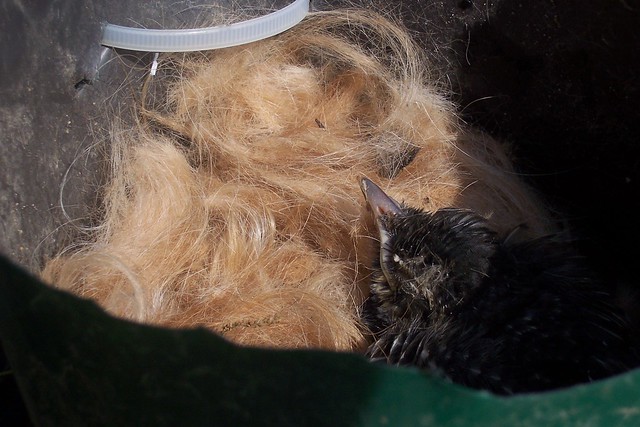
My next not so brilliant idea was to create a lip for the nest so the orphaned baby bird could stay in the nest with its siblings. As I was placing the lip around the nest the two baby robin residents decided they'd had enough and jumped out. Geez! Mr. Fix-it was chasing them down and I was still busily putting the new improved nest together. All good intentions mind you. We lost track of one of the babies but since it was evening time and since the parents were nearby we knew as long as we kept the dogs inside the baby would most likely be safe. The other two were placed back in the new improved nest and we again stood back to watch our handiwork. The parents came back and fed both of the babies! Including the orphan that Mr. Fix-it had found in the back of the truck.


100_2837


Here is the funny part. After comparing our orphan with the other two babies already present in the nest we realized the orphan was maybe a day or two younger than the two in the nest. This meant that the orphan baby was not part of the PVC arbor nest after all! It seems that there is another robin's nest in the oak tree out front. We figured our orphaned baby robin fell from the nest from out front into the truck since the truck was parked under the tree. At any rate, the parents accepted the orphan and began feeding it along with its own. All's well that ends well right? Well, this story is not over yet. Hence the frustration.


100_2836


The next day we went out to check on the robins and the two original baby birds were gone. They'd flown the nest. Our orphan was still in the nest, though not in the original nest. It had moved to the pseudo nest (the flower pot). We believed the parents were still feeding this baby as they were close by and scolding us as we looked at the lone orphan. We were hopeful for a good outcome for our orphan but it seemed like the baby may have injured its wing when it fell from the tree. There were no vines there to break its fall when it landed in the back of the truck.


The next day we checked on the orphan again; only to find it had died. With all best intentions to save this baby robin we could not. Sometimes nature is like this and I tell you it can be a cruel thing to feel helpless while a living thing dies.


I open this post with the fact that many animals die. Over the past few years as our yard has become more wildlife friendly due to the dense shrubs and vegetation we have noticed many more dead baby birds. It is always heartbreaking to us but we witness this part of life. While we try to help them out as we can we really can't do much but hope for the best for the baby birds....


in the garden....

Happy Memorial Day to Everyone!
Words and Photos Property of In the Garden Blog Team, In the Garden
Monday, August 2, 2010

Variegation; Reversion to Non-Variegation and Master Gardeners

From In the Garden

Have you ever seen a green shoot growing in a variegated plant and wondered what was up? Plants manufacture food by using specialized cells called chloroplasts. Chloroplasts are colored green. The more chloroplasts a plant has and the more green it is the more food and more robust a plant is likely to be. When a plant is bred for variegation some of the chloroplast area of the leaves is removed and the plant is not quite as stable or even robust. The plant can sometimes strive to get back the chloroplasts and can revert to its natural state of solid green leaves in an attempt to get more food producing cells. This seems to be the case with the above variegated hydrangea I found at the University of Tennessee's Agricultural Research Station in Jackson Tennessee during this year's Summer Celebration. The green branch sure stands out doesn't it? I'm not sure how the UT staff handle this but in my garden when variegated plants revert I immediately prune out those green limbs in order to maintain the variegation. Left alone it is possible the plant will turn completely green as the green limbs slowly overtake the variegated limbs.

This reversion is not limited to hydrangeas. I've personally seen it on Japanese maples and privet. Have you ever seen this type of reversion and what do you do to deal with it if it shows in your garden?

in the garden....

******PSA*******

The next scheduled Montgomery County Master Gardener class starts August 17th and runs through November 16th. Classes will be held at the extension office on Tuesdays from 6-9 pm. The cost of the class is $100 per person or $125 per couple (if using the same book). Deadline to sign up is TOMORROW! So give Karla a call right away at: (931)648-5725 to reserve your spot....

in the garden....


Words and Photos Property of In the Garden Blog Team,

In the Garden
Monday, June 14, 2010

Do You Really Want to See What a Vole Looks Like?

If the answer is yes to the title of this post, then you've come to the right place. Voles are similar to mice-kind of. They are both rodents and both pests in my opinion. I've lost more than one of my shrubs to the voles this year and I tell you these little rodents almost make me want to give up gardening-almost.

Let's discuss the voles because I can't tell you how many people don't know what a vole is and what it does to a garden. Voles and mice are not the same thing. Many people call voles field mice but voles are not mice at all, though they are both rodents. The major differences between field mice and the voles are these: on voles: the head is larger, eyes and ears smaller (actually both are not even really visible-just look at the photo), the tails are only about one inch long or shorter, they have very short legs (this helps them stay low and escape detection by predators like cats and birds), and the teeth are made differently, though I can't really tell what is different about a voles teeth. This particular vole is a brownish color on its back but I think their color is variable.

I do know voles will target plants more than any other rodent in the garden. When a plant is targeted the plant is most likely doomed. In the past I've only lost perennials and a few roses. This year the voles have moved up in the food chain and taken a few bigger specimens out of the garden with their chewing. Roots are chewed off at the base of the shrub and the shrub is not likely to recover.

Voles should not be mistaken for moles
though voles will sometimes use the tunnels moles dig in order to move around the garden. In my garden I leave the moles alone and just kind of figure they are aerating the soil for me. The damage they do is not long lasting when compared to killing a tree or shrub and is not bad enough to warrant a mole's demise; that is simply my personal opinion, like all things on this blog. Voles on the other hand can seriously destroy a garden. Here are some interesting facts about voles (Courtesy of University of California):


1. Females reach sexual maturity in about 35 days and can have more than five litters per year!
2. Voles are not good climbers and usually don't enter homes.
3. Voles make their homes in areas with dense vegetation (gardens for sure!)
4. Voles are active day and night!
5. Vole populations fluctuate from year to year and under favorable conditions there may be a vole explosion.
6. It is best to use Integrated Pest Management tools to control voles before their population gets too large because damage to home and ornamental gardens can be severe.
7. Remove cover such as vegetation and leaves to make the area less favorable for voles.


Some tips I have personally learned that help to protect plants:


1. Limb up ground hugging shrubs such as magnolias and silverberry. They don't need to be limbed far, just enough so that the ground is visible and the voles can be seen so they are vulnerable.
2. Remove leaves from under shrubs and trees during the winter.
3. Periodically check for damage by stomping the ground around your shrubs and perennials. If there are voles present the soil will be gone and you will quite clearly feel a void. Backfill the area and take measures to get rid of the voles. Keep checking and back filling the area periodically.
4. Use hardware cloth around prized plants. Make sure it sticks up above the ground and leaves are moved away from the plant.
5. Get a couple of good mousing cats.
6. Try out the mole repellents as a last resort. They have worked for me but the extra expense and application make them not so ideal for long term use.


Good luck keeping the voles away now that you know what they are and what they look like....

in the garden....


Today is Flag Day, and also the Army's 235th birthday. Those of us associated with the Army get the day off. So Happy Birthday and Flag Day and thanks for the day off...in the garden...


Words and Photos Property of In the Garden Blog Team,

In the Garden
Friday, May 28, 2010

Bird Gets Stuck in the Bird Feeder: No Laughing Matter


This was not the post I had originally scheduled for today but I thought this drama merited a change in the posting schedule. I was doing a bit of gardening in between working on a landscape design when I spotted a titmouse stuck in the bird feeder. Obviously the bird feeder was empty and the titmouse thought he or she could outsmart the emptiness by reaching inside-with its head. I thought to myself "Wow! A picture opportunity!" I ran and grabbed my camera and the poor thing was still stuck in the bird feeder-I thought "What luck!" But then it became clear the bird was actually stuck! Struggling as hard as it could it could not free itself from the feeder. I immediately got the boys to come and help me try to get the poor thing out. Its head was somehow jammed in between the opening and the frame holding the opening. I tried to gently push its head out and pull its body out at the same time. The little bird first bit me then squawked and he wasn't budging! How do you tell a little bird to be calm and relax and it can get itself free? It wasn't working for some strange reason:) Enter Mr. Fix-it who immediately took off one of the bars holding the feeder together and the little titmouse flew off none the worse for wear.

I have had this bird feeder for more than five years and never has a bird gotten stuck in it. Has anyone else ever had this happen to them? It was a bit of drama for a little bird...

in the garden...that ended well.

Words and Photos Property of In the Garden Blog Team,

In the Garden
Friday, April 9, 2010

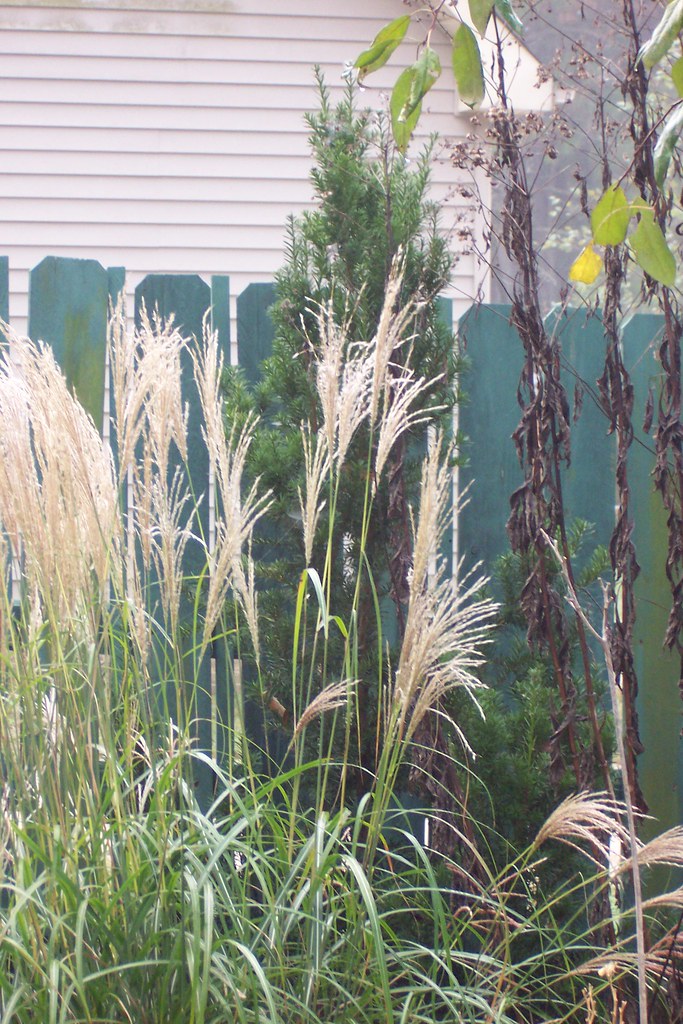
Voles Eat Japanese Maple

No one can say the voles around here don't have good taste when they decide to totally chew the roots off from one of my Japanese maples now can they? Grrrrrrr! I was wandering around a front garden when I came upon this maple laying on the ground. I immediately thought perhaps the wind knocked it over. No such luck. Upon investigating I discovered the roots had been chewed off. It had to have happened really quickly because this tree is in bud and still looked alive. Geez, what do you do when this happens? Drive on, gardening is like this sometimes.

In order to hopefully prevent anymore plants from suffering the same fate as the Japanese maple I went around to all the small trees and shrubs in the garden, moved all mulch away from the trunks, and stomped the ground down firmly. I found a few more shrubs with damage from voles as well as the Japanese maple. A prized fothergilla will most likely meet the same fate as the above Japanese maple but after packing dirt around it I am trying to be optimistic.

The population of voles in a garden is mind boggling and even with two cats outside, plenty of rodent eating birds and maybe a few snakes and rat poison, nothing seems to make a dent in the population here. The voles have to eat and they evidently spend the winter nibbling on roots all throughout the garden. This has been a bad year for them. Normally I don't lose any trees or shrubs and have only suffered major damage to perennials in the past. No such luck this year. But oh well, time to move on and forget all about it. Perhaps the voles didn't like the tree in its spot? Who knows. I guess they were very hungry. All I can do when I walk around the garden now is thank my lucky stars the voles didn't eat the very large trees because to see one of them fall might be a very bad thing....

in the garden....


Words and Photos Property of In the Garden Blog Team,

In the Garden
Monday, March 1, 2010

Gardening WITH Dogs

From In the Garden
The way I see it gardens and dogs do not go together no matter how you slice it. People and dogs do go together however. So what happens if the people happen to be gardeners or if not gardeners, maybe just someone who happens to love dogs and appreciate good landscaping? There is the crux of the matter and we need to figure out some solutions. I have four dogs, three are very large and have caused some serious damage in my gardens. While gardens will heal and can be repaired the frustration of dealing with the damage is more the problem for me. I've had to figure out ways to reduce the stress of having these wonderful dogs in my backyard or continually be frustrated so here are some of my solutions. I hope they can help you if you garden with dogs..

The way I see it there are a few main issues when it comes to dogs in the garden and I will address each of them based on my experiences with my wonderful mutts-uh dogs. Those issues in simple terms are:

1. Running through gardens
2. Chewing
3. Relieving themselves
4. Digging
5. Drinking and bathing in water features

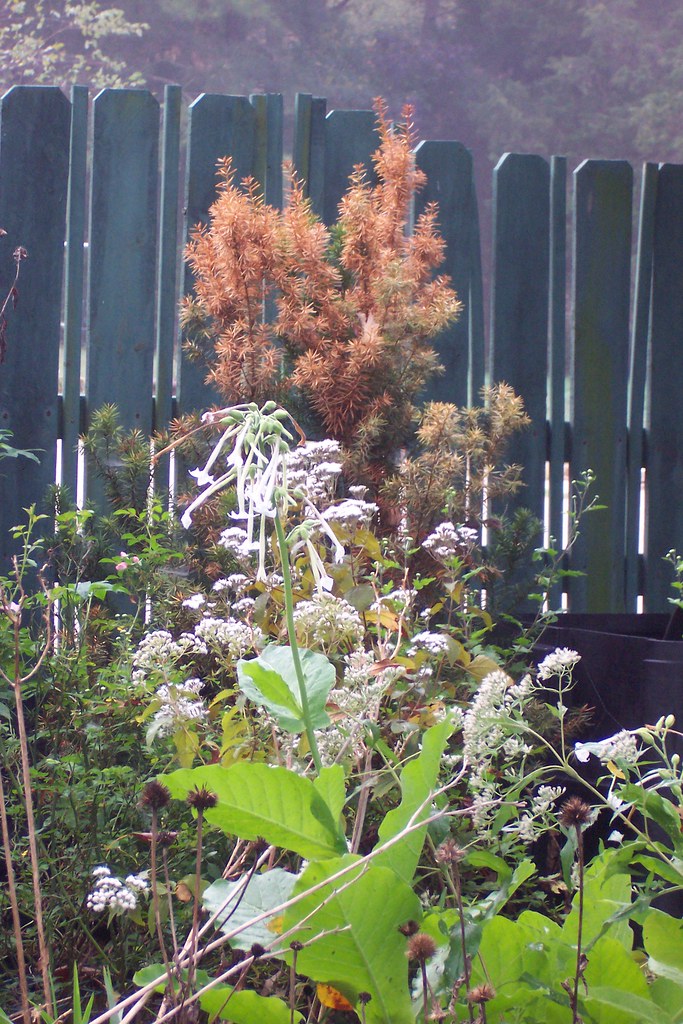
Running through gardens is probably the biggest complaint dog owners have when addressing dogs in the garden-next to digging. Dogs are just made to run. They don't care what they run into, over, or under, they just want to run. Let's hope there are no neighbor dogs your dogs are running after but most likely there may be another dog or two in the neighborhood; which will make the problem three times as bad. Trust me, I know. Here is the way to solve that problem. If you are able to, put in a privacy fence so your dogs can't see the other dogs and the problem will be somewhat alleviated. If this is not a workable solution for you then plant groundcovers and shrubs along the runway along your property line. In the picture above my dogs run along that fence fairly frequently. There are a few dogs that live on the other side of the fence and even with the privacy fence the dogs still occasionally run along the fence but not as bad as they would if the fence were not there. Next to the fence I planted a really strong groundcover that is low maintenance and is not fazed at all by a pack of dogs. The groundcover is Liriope spicata, aka creeping lilyturf. This liriope is also called monkey grass in some circles but this type of monkey grass should not be confused with Liriope muscari, aka lilyturf or monkey grass. Liriope muscari will also work as a great groundcover but it is a clumping grass versus the creeping grass like the spicata. Clumpers (muscari) work well but do not hold onto the soil as well as runners (spicata). Spicata cannot be bothered by anything. Tree roots, shade, weeds, and dogs are all laughed at by the spicata which grows and grows and grows and looks good pretty much all year long. As a bonus it is low maintenance. All I do to mine is weedwhack it or mow it at a high length in February of each year and that is it. You don't have to mow it but I choose to for aesthetics. Other groundcovers would probably work but there are none I would recommend planting in your garden due to the invasiveness of them so stick with spicata for a groundcover to protect your ground from dog paws.

The above picture shows my privacy fence with the spicata growing along side it. Bella still loves this area and has made a path through the spicata but the ground itself is safe and not prone to erosion due to the dense roots of the spicata. Spicata is great to stop erosion, weeds, and to cover a difficult area such as this area under a silver maple tree. Note: Spicata WILL run too but is much easier to get rid of if you decide it is not for you. If you do plant spicata choose your location wisely and be prepared for it to spread in shade or sun, dry or wet soil-it's quite adaptable.


I have also planted shrubs and trees along this and other fence lines in my garden. They help out but when a dog gets going even thorny shrubs are not likely to stop a dog's run to getting where they wish to go so you still need to protect the ground. Mulch is also a good ground protector but requires more maintenance.

Okay, when a dog is doing its business and not intent on playing with another dog or chasing a squirrel they are more sedate and more manageable in the garden. I have found that borders such as the stone edging along trenched garden beds as in the above picture work great to guide a dog's path. Rarely will my dogs venture into this garden even though they like running along the fence at the back of the garden. Once the dogs are done playing they will naturally gravitate toward the paths in this garden out to the turfgrass where they will follow the edge of the garden around to the next new spot they wish to explore. The rock borders and trenched gardens work like a charm and are attractive as well for directing a dog's run.

I do sometimes have to take tougher measures to control the dogs though. When it comes to chewing and breaking habits sometimes the only thing that will work are fences. I know most folks don't like fences in the garden but I am more of a functional gardener than an aesthetic gardener so I use fences when necessary. The first picture on this post shows one of my fences as well as a pathway. The dogs tend to stick to the paths through the turfgrass and don't usually venture into the fenced gardens. This garden really needed protection because it apparently had some nice and juicy trees and shrubs planted in it. One very expensive and desirable tree that was eaten by one of my goldens was a weeping Japanese maple. I was not a happy camper. Now whenever I plant a new tree or shrub I usually circle it with 24-36" wire until it is big enough to fend for itself. Sometimes this takes years but is worth it to protect the plant and the dogs. Shrubs like camellias and rhododendrons are supposed to be poisonous to dogs and for some reason my dogs have a taste for these shrubs. Fences are necessary in these circumstances.

Now we get to the last few issues. Relieving themselves is a big yuck for gardens but oh so necessary for the dogs. The best solution to deal with wastes from a dog is to select an out of the way spot in the garden and train your dog early to go only in that area. Training puppies is the best method but even older
dogs can be trained to relieve themselves in a certain spot-far away from living areas. You will have to walk your dog to the designated spot (most likely on a leash) and build a habit for that dog to relieve itself in only that spot so it will take time and training but will be worth it in the long run. Once the habit is in place it should stick with the dog for its entire lifetime. I find that generally dogs tend to find an out of the way spot anyhow but in case they regress or like to use pathways you can gently retrain them not to do their business in such a spot by catching them in the act and redirecting them. They don't forget such indignities I can assure you. Cleaning up after your dog is an important part of maintenance chores in the garden as well.

One note on urinating. Many people complain the dogs leave a yellowed spot in areas of their lawn when they urinate. In the eight years I've lived here I have had only one yellow spot and that was during a drought in 2007. If you have a problem with urine concentrating and building up in your garden rinse the area with a hose daily. This should help. Otherwise I don't stress about urine unless it is on me!
Another issue we have to deal with when gardening with dogs is digging. This is a frustrating trait. My little dachshund was the worst when it came to digging when he was a puppy. He would dig and dig and dig and no matter how quickly I tried to fill the hole I never could find enough dirt to fill the hole up and still he would dig. I still wonder what happens to all the dirt! My solution to digging is multi faceted like my other solutions. No one trick will solve all issues with dogs and gardens. Being proactive I would try to catch a dog in the act of digging and severely scold them for it. This helps. I also try to limit the dogs freedom outside when I am not around. I know bored dogs tend to dig. This helps a bit too but it will not completely eliminate the problem. Here is the good news, as dogs age they seem to dig less frequently. My dachshund never digs and neither do my goldens, though they all had their moments when they were younger. Enter Bella, my daughter's rottweiler mix mutt, she digs. She is young. She is persistent and most irritating. I can always tell when she has been digging because her dirty nose gives her away. Bella's favorite spots to dig are near the house and wherever newly planted plants have been put in. Grrrrrrr! We've had a real issue with her this past year. I try to catch her in the act but even that is not enough to give her the message digging is not acceptable. In her situation I usually wind up placing a barrier over the hole. I usually use mesh wire like chicken wire, heavy rocks, or even the above pictured trellis to block off her current holes. This just sends Bella somewhere else to find easier pickings but at least the hole doesn't get any larger and I can fill it in. Sometimes I leave the barrier in place because the problem is ongoing, sometimes I remove the barrier. I do like to cover the wire with mulch when I leave it in place so no one can even tell there is a wire on top of the ground-but Bella! Barriers help but digging is one of those things I think dogs may always do, especially young dogs.

Another area of concern might be with water features. My goldfish in my little bathtub pond may have received a few shocks when a 100 pound plus dog jumps in and takes a bath. Perhaps BJ reasons it is a bathtub after all? At any rate this is not desirable and could wreak havoc with not only the fish, but the plants and the pump. When BJ is not dunking himself in the pond Bella is drinking from the pond. Sigh. My solution is to provide the dogs a pool of their own. I purchased a small hard plastic pool for them. The pool is less than four feet round and easily dumped and refilled as necessary. The dogs will always use this pool over the pond provided it has clean and fresh water in it. They also drink from it fairly frequently on hot days.

These are pretty much the major problems I find when trying to work with dogs and gardens. What are your issues with dogs and do you all have any tricks that help you when dealing with dogs?

in the garden....


Words and Photos Property of In the Garden Blog Team,

In the Garden

Monday, February 8, 2010

Pecans and the Pecan Weevil

Don't you just love fresh pecans? We do and wish we had room for a pecan tree in our yard but we don't. My neighbor across the street has a huge pecan tree in his yard that is quite lovely to look at. It also has the bonus of dropping lots of pecans each year. Several of these pecans somehow wind up in my garden where they quickly sprout and begin growing into trees-read more weeds to pull:( Sometimes I find the pecans before they sprout and I think of cracking them and eating them but then I notice small holes in the shells. Hmmmm, wonder what causes the holes I thought to myself.


From In the Garden
The answer to the question of what causes holes was partially solved when Volunteer Gardener aired a segment on pecan borers. I had never even heard of these insects before this show and had no idea pests would bother nuts. Duh me. Hmmm, this bears further research.

Research came in the form of shelling a large box of pecans sent to us by our sister in law in North Carolina. It seems she has a ton of pecan trees near her home that yield some bea-u-tiful and delicious pecans. So, on a recent cold winter night Mr. Fix-it and I commenced to shelling, and shelling, and shelling. There is still yet a lot of shelling to do but back to the pecan pests.

While shelling the pecans we found some of the nuts were blackened inside. The kernel was not edible at all. I didn't look closely for any pests at this point but one came looking for me. Somehow a little white worm showed itself to us-ick! I knew immediately that this was normal and nothing to be alarmed about, however it still was not pleasant. Unless you are VERY diligent with spraying insecticides you will have some pests in nut trees, fruit trees, vegetables-you name it and they might come calling when you least expect them as in the case of our pecans.

I'm not going to caution you all on the picture below because like me, you are gardeners and used to pests especially if you are hesitant to spray poisons. I am not averse to using insecticides in the right circumstances, but my threshold for a certain amount of damage allows for some pests. Some pests were what I found in the large box of pecans. No problem, I can quickly do away with that issue-and did so by throwing out the affected pecans. The rest of the batch was fine.
At first I thought these little worms were a borer, but upon further research I am pretty sure this pest is a nut weevil. Note the blackened part of the kernel. This is a very common pest and the University of Kentucky website linked in the previous sentence does a great job of describing the pest and its remedies. The website says you can cure the nuts by gathering daily then heat treating them. There are other methods too but for small infestations just tossing the affected nuts is fine.

One thing I want you all to note about this pest is that it overwinters in the ground. The eggs are laid by an insect in the nut while the nut is still on the tree. Once the nut falls to the ground and the grub is more mature it bores a hole through the nut then digs into the soil where it overwinters for one or two years. It will emerge an adult when mature and begin the cycle all over again. It is very important to clean up rubbish and leftover nuts under your nut trees if you wish to reduce this pest population.

I have a hickory tree in my garden and I try to remove those nuts each fall when I rake my yard. I've not had too much of a problem with these weevils but then again I don't try to eat the hickories so I'm really not sure if there are weevils in my nuts or not. On the other hand my neighbor might have some good pecans but the ones that blow into my are not because they are all full of holes from pests....

in the garden....


Words and Photos Property of In the Garden Blog Team,

In the Garden
Thursday, July 2, 2009

The Bane of My Garden: Poison Ivy/Oak

Bane as defined by an online dictionary is: 1. fatal injury or ruin 2. a. a cause of harm ruin or death, b. a source of persistent annoyance or exasperation, and 3. a deadly poison. Or in other words, bane equals poison ivy, aka Toxicodendron radicans. In my garden poison ivy is the bane of the entire garden. There is not one single garden that does not have poison ivy happily growing in it. Urgh!

It has not always been poison ivy though. Last year the bane of my garden was oak trees. They self seeded everywhere. This year it is poison ivy. I can pull it, I can spray it, I can cut it, I can mulch it, but still it rears its ugly little head. And I thought I had issues with pulling baby trees, try pulling poison ivy!

I read somewhere that you can pull poison ivy when it is small and it won't cause a rash-usually. Up until this year this was a pretty good bet for me. I'd use my index finger and thumb and quickly pull the poison ivy when it was tiny. No problems with rashes. Oh sure, I'd occasionally get a rash but it was not a big deal. Not so this year. I've had a poison ivy rash from my toes all the way to my neck and everything in between, especially in between if you know what I mean. Time to rethink my philosophy on pulling poison ivy. Hmmm. It has gotten to a point I really dread walking the garden. The poison ivy just continues to sprout no matter how many I pull and it is causing me more and more rashes. What a bane-pain?? Help!

Anyone else having issues with poison ivy? I'd hate to guess why it is so bad here in my garden, but the rain may have helped a bit. Any other ideas? What is the bane of your garden this year? And do you find different weeds do better in some years than others?

in the garden....with a tube of hydrocortisone-a BIG tube.

Thursday, May 7, 2009

Oak Flowers: What a Mess!

Every spring brings a bit of a messy problem in my Tennessee garden. Oak flowers fall everywhere and get into everything. There is no escaping them when you are shaded by mature oaks in the garden. Do you see all the oak flowers swamping my deck? What a mess to clean up! And here you thought trees only dropped leaves, and those only in the fall. At least this is what I thought prior to moving here in 2001. Big surprise for me! It's okay, give me the shade any day and if I have to put up with all these messy flowers falling for a week long period in the spring, so be it. Right now I have to get back to sweeping the deck....

What messy problems do you have in your garden caused by trees? Cottonwood? Pollen? Flowers? Branches? Do you do anything special to deal with these issues?

in the garden....

I'll be out of the net the next few days. Finals and projects will occupy most of my time. So don't worry if I'm not around. I'll do my best but it is a BIG project. (read tough!)

Tuesday, April 14, 2009

Cedar Apple Rust Gall


Cedar-Apple Rust is a bane in my garden. I hate it! At first the gall; which shows itself in Eastern Red Cedars (Juniperous virginiana), seems harmless enough, even if it is a bit weird looking. There it is above. This is the actual hard gall and is how the fungus overwinters in the junipers. You see, cedar-apple rust, aka Gymnosporangium juniperi-virginianae, is a fungus that completes its life cycle on both junipers and apple trees. In my case, I have a crabapple not far from this particular juniper and I suspect the two are exchanging fungi whenever it rains. The crabapple never shows any damage so the juniper must be getting the worst of it. Stupid plants!! They need to quit that frolicking and exchanging of fungi!

I actually cut about seven of these galls out of this particular juniper. What is also funny, is that I have other junipers that are located closer to some of the crabapples growing in my garden, yet this particular juniper is the only one that shows any infection. Go figure.

Well, with the recent warm weather and rains we've been experiencing, guess what happens to the gall?

It turns into something totally different from the hard gall in the first picture. It kind of looks like a soft sea urchin doesn't it? It feels just like it looks too. Yucky! The orangey tentacles growing out of the gall are called telias. These telias produce spores that are spread by the wind to the crabapple trees. Once on the crabapples the spores grow and produce lesions that are unsightly. In mid to late summer during dry hot weather, the lesions produce more spores called aeciospores. These spores are blown onto nearby junipers and the whole process starts all over again. Yuck!
The Cedar-apple rust fungus can be treated with fungicides. I have chosen not to spray fungicides in my garden, so I guess I'll just live with the fungus or cut it out of the tree when I can. I am hoping I avoided infection by cutting all the galls out of this tree. Time will tell. The best management practices include planting resistant varieties of trees when you are able to. This is not always the case and in fact, I think rarely is the case. Most junipers around here grow wild so how could you possibly determine which is resistant? The other junipers in my garden that I mentioned above show no signs of being infected, so perhaps they are resistant? I don't know, but I do know I will not part with this very mature juniper in my front garden. I accept this fungus since it will not kill my trees, simply disfigure them a wee bit, and they all recover. All gardeners have to decide for themselves what type of damage they will accept and use best practices to manage problems....

in the garden....

Thursday, April 9, 2009

Encore Azaleas-Not so Encore

This is one of those not so rosy posts about gardening plants. Yes, I occasionally throw some in. I purchased two 'Autumn Chiffon' Encore Azaleas from the clearance rack at Lowes last summer. I was very excited as these two large azaleas were so drastically marked down that I paid only a few dollars for them. But, getting a good buy is not such a good thing if they don't do well and earn their spot in the garden. This has been the case with these two Encores.

First of all let me say that I already knew of the bad reputation Encore Azaleas have as far as cold hardiness. One of my classmates in horticultural school worked for a large nursery in Nashville. She told me the nursery owner refused to carry Encore azaleas because they are not reliably cold hardy, even to their rated zones.

For the record, Encore azaleas are rated as cold hardy in Zones 7-9, and in Zone 6 with protection. I am on the edge of Zone 6/7. I grow a few ornamentals that are not rated as cold hardy to my zone, yet they do well. Some are: camellias, and daturas. The banana I grow is rated as root hardy to my zone so that really doesn't count. At any rate, I theorized that with the world getting warmer and with the right spot for these azaleas they would do well. I was right. All last summer the azaleas grew and looked so good! They actually sporadically bloomed too. I was very excited about their bloom this spring. This excitement lasted right up to around February. It was at this point the azaleas took a nose dive, and it was a rather sudden nosedive too.


I kept looking at them trying to see if any buds were forming when I finally noticed the azaleas were pretty much all brown. Browning is not a big deal in the winter, as evergreens tend to get a bit frostbitten, but usually they recover quickly when it warms up. I did not pay much attention to the azaleas at this point since it was still cold. You know everything looks brown in the winter anyhow. But now that it is spring and warm weather has arrived I expected to see new growth on this azalea-green growth. Look closely, it is not there. No recovery seems to be in the near future for these guys.

I have pruned the dead areas out of the two azaleas and am hoping for the best. These azaleas may yet bloom but I am just not sure the Encores live up to their names and I would caution folks in my growing area to plant them with care. There are far better azaleas that will not give the gardener more gray hair-she has enough already!

I will hold out and hope these azaleas still bloom this spring, but it's not looking too good. Since they are planted in a sheltered area and well mulched, I think they will recover sufficiently this season so that they may even bloom this summer. Not sure, but since the Autumn Chiffons are not in the way and are set in a good spot, I'll keep them around a bit longer, but I will not hope for an 'Encore' from them anymore.

There is an awful lot of talk on the subject of Encore hardiness ratings. As for me, I think my friend's boss was right not to carry the Encores and I will not buy anymore, no matter how marked they down are....

in the garden....

April 2009: This post gets hits at least once per week and sometimes many hits each day of the week! I can see there are many other folks having trouble with the hardiness of the Encore azaleas. I'd like to be sure you all see my second post on my Encores because they DID bounce back after another growing season. I will again update my experience on my Encores after this season (2009-2010); which has been very cold-but normal for my Zone 6B garden. Stay tuned and check back later. Also, you might click on the label "Encore Azaleas" on my sidebar so you can read ALL the posts on the Encores. Hang tough with yours! Thanks. tina


Update 15 Februay 2011: My Encores bounced back again in 2010 and bloomed beautifully. My conclusion with growing my two Encores here in my Zone 6B garden is that this is a plant that should be planted in the spring. Additional protection from dessication might not be a bad idea either. 

Thursday, February 5, 2009

Multi-Trunked Trees

Do you have multi-trunked trees in your garden? I have a few, but not really by choice. The pictured silver maple was already seriously multi-trunked when we purchased the house back in 2001. I like the effect, but not the problems multi-trunked trees bring to the home gardener. Most any tree can possibly be multi-trunked, but you should consider the structural quality of multi-trunked trees when allowing the additional trunks to grow. I have found the multi-trunks come from suckers that start at the base of the tree. If the homeowner is not vigilant in pruning those suckers out of the tree, they will wind up with something like I have. While it is not unattractive, it is worrisome. Only so many trunks will fit into the space before they begin to grow together. Perhaps this is normal, not really sure.

It seems maples are most prone to this suckering and have a propensity to grow multiple trunks; which is okay if you can keep up on the growth habit of the trunks. The problem I find is that the trunks get too big and crowd each other out at the base, perhaps making the tree a bit weaker and unstable.

I do not like this situation at all. But what can I do? I certainly do not want to mangle the tree by taking out one or two trunks, yet I worry Mother Nature will do it for me if I don't. Note the far left trunk is resting on the privacy fence. That trunk will for sure have to be removed at some point, or the fence will come down.

What are your suggestions to deal with this problem? Any ideas? I do love multi-trunked birches, and I guess to a certain extent the crepes, perhaps even maples, but I think this particular silver maple has too many. What do you say? Anyone else have this problem?

in the garden....contemplating multi-trunked trees.

Wednesday, January 28, 2009

The Ice Storm and Trees

Just how much weight from ice can a pine tree withstand before it breaks? That is the question. Wait a minute, I'm getting a head of myself. Actually, the question of the morning from the Jimster is, "HOW DO I FIND OUT IF SCHOOL IS CANCELLED? THE TV DOES NOT WORK!" at 5:30 in the morning. We here in my part of Tennessee had a terrible ice storm last night. Prior to going to bed I was hopeful it would not be too bad, but the pelting of my windows with freezing rain all night left no doubt there was ice on the ground. So I simply told the Jimster to go back to bed, and I slept in too. The ice storm did not claim the power lines as casualties, but the cable line and evergreen trees such as pines and cedars did not fair as well. Without cable, I have no telephone and no Internet and no television. Sigh.

Enter my one pine tree in the front yard. It is a short pitch pine and a treasured tree in my landscape. It shelters me, the house, birds, provides many pine needles for mulch, and pine cones for crafts. It is a favored food source of the yellow bellied sapsucker (one of these days I'll catch him with my camera) and is a tree I would be terribly distressed to lose. So upon looking out my front windows I see my view has changed-dramatically. I actually kind of like the new view, but it is not normal for these limbs to be touching the ground. I mean gee, I spend hours limbing up my trees just so I can look out and not run into them-what will I do now? The above pictured limbs are normally 15-20 feet off from the ground. Just look at that one limb that is bent nearly at a 90 degree angle! I am amazed!


I am also very lucky, especially because as I was walking around the garden (in the freezing rain) I heard several very loud cracks. C--R--A--C--K! Not a welcomed sound for my neighbor two houses a way. They had several pine boughs break and fall onto their deck. Such a shame for the trees. The deck can be repaired, not so the trees. The pine tree grove belonging to my neighbor is pictured above. You can see the broken limbs on the ground if you look closely. See how much those trees are leaning? Bad situation for a homeowner.Update: As of 8 pm, one of these tall pines fell on my neighbor's cable line-see the telephone pole there? No telling what else will happen by morning.

Speaking of homeowners, the Eastern Red Cedar pictured above is my tree. It is one of two leaning cedars in my backyard. The other one is leaning over the pool. It could spell dire consequences should it fall. The last time we had a big ice storm was in December 2006 (the same ice storm where I snapped the pictures of the meadowlarks) and the same thing happened to the cedars then. They recovered nicely and I expect they will recover this time too-provided we don't get too cold tonight with the other winter storm coming in. I have my fingers and toes crossed.

What can you do when this situation happens? Well first of all, losing a few branches is not going to kill a healthy tree. Splitting down the middle might, but hopefully it has not come to this point in my garden, though many of my neighbors are facing this challenge. But it is okay, it is the way it is sometimes. No panicking allowed. If a branch breaks off the first thing a homeowner should do is get a professional opinion from an arborist as to what to do. (That is the book answer) In my case, I know what needs to be done. The tree should be laterally pruned back to the trunk so there is no unsightly stump left for insects and disease to enter. This is an easy fix. Pick up the leftover branches and burn them in the fire pit, that is the next step.
Now the shrubs, they are a different matter. I took the time prior to the ice storm to tie the dozen or so 6-8 foot tall arborvitaes together. The precaution worked wonders. Though the trees are leaning a bit at the top, all stems have stayed together. I am relieved.

I knew the above pictured Arizona Cypress would be a different matter altogether. This is not the first time it has been laid horizontally, and probably won't be the last time. This tree was planted as a 3 foot stick in 2003. It now towers to about 15 feet. It is a gorgeous, gorgeous color blue and the foliage is so textural that it is a big asset in the garden. Additionally, it has the classic pine scent when brushed up against by the gardener. I suppose I could've tied it to Mr. Fix-it's garage, but chose not to do so. I know from past experience it will bounce back. The trunk; which is a good 6 inches in caliper; is pretty pliable. Once the ice melts I will brace the tree back up and tie it off down low to keep it from swaying. Tying it off prior to the ice storm would not have prevented the total bending of the tree but will help the tree stabilize itself now. (I hope)

I just don't know how northerners deal with so much ice. I always worry so about my trees and shrubs, but have finally come to a point where I just deal with it. I tried in vain to shake off the ice this morning, but since the temperature hovered around freezing all day and the ground was very cold, the ice was not budging. Such is life. At least we are safe and have heat-and now cable too! Oops-spoke too soon-the power is coming on and and off and more freezing temperatures and danger is forecast-gotta go...hopefully by the time this posts tomorrow THE storm will be behind us.

in the garden....straightening and staking trees.

As an aside, I am now a member of a German Blog called Ruhezone. What does Ruhezone stand for? Relaxing Zone. I intend for any posts I do over there to be very relaxing-for me and the readers (at least that is the intent:)

I met Kathrin online just yesterday and we hit it off. This is the thing about most of the German folks I know, they are very trustworthy and in return trust you, as she did me in order to invite me to occasionally guest post on her group blog. Thanks Kathrin for your trust!

Wednesday, January 14, 2009

Girdling Roots Hurt! And Sometimes Kill!


Girdles hurt! And you know what? They sometimes kill! Yup, this is what happened to Shan and Susan's special dogwood that USED to grace the front of the home.

All of sudden the tree started declining. No matter what was done to try to help the tree, it was in done in vain. The tree perished. This tree was planted with a girdling root. A girdling root is one which is growing around the tree trunk or other main roots. As it grows it begins to strangle the tree. We gardeners have heard of this all the time, but have probably never seen the effects. Take a good look. It is not pretty. This was a large and beautiful and special tree.


When you purchase new plants, especially woody plants, be sure to pull the roots out straight prior to planting. If you have a wrap around root (and you probably will due to pot bound plants), cut the root. Ensure girdles don't get your woody plants!

in the garden....

There is another problem with this tree, I believe it was planted too deep. Normally you want to plant the tree where the first major root flares out. This spot should be at ground level. If you look closely you will see the girdled root is above the first major root, though it is hard to tell what is on the other side of the trunk. Just take care when planting all trees....in the garden for girdles.

Monday, January 5, 2009

The Number One Mistake for a Plant Lover

We all know the number one mistake gardeners make in the garden is to not allow enough space for the mature size of their plants. I have a number one mistake I am betting experienced gardeners make in the garden. Bear with me now. If you are the type of gardener who takes your time and plans every square inch of your garden, knows exactly where all of your plants are and pays very close attention to them all, then stop reading, you don't make this mistake and my hat is off to you! But, if like me, you plant and plant and plant, and sometimes forget what you planted and where it is planted, then you make this mistake despite knowing better and despite planning. Trust me, it happens to us a lot.

The above cyclamen is growing in and amongst a wood hyacinth; which is not an ideal situation for either plant. These two both grow in my woodland garden and are actually doing okay I suppose. What is my excuse for planting like this? I could use the fact these plants are ephemeral
and don't stay around long enough for me to realize they are there, but that is not the reason they are planted on top of one another. No, I just simply run out of room, forget what is there, or don't care and plant something else. The result is not pretty. To say my garden might be a bit over planted would be a true statement. Anyone else have this problem? Make this mistake? And besides planning every little grid on paper, or marking the garden, what is a handy solution to prevent planting on top of plants in the future? Stop planting? Now you all know I couldn't do that and I bet you all can't either-so do I just live with the situation?

in the garden....

Friday, December 26, 2008

Reporting A Spammer


Many of you might have been victims of spam, or are victims as we speak. Sitemeter has a wonderful little feature that can track location, IP address, and so on. A certain little spammer spent over 95 minutes on my blog this past evening. He accessed 12 pages and left several messages advertising an unnamed drug.

Tracing the IP address through Sitemeter shows an IP Address in India. Seems simple enough right? Nope, using a simple little website found here, I was able to not only find the originating IP Address, but the address WITH a telephone number AND name of the person who is very likely committing the offense of spamming this blog. The person is not in India where the initial IP Address pointed us to, he is most likely the person I traced to Minnesota in the good old United States.

The person(s) who I found listed at the Minnesota address received a call from me yesterday afternoon, and I am waiting to see if he has the nerve to return my call as a message was left for "John" the Spammer. He hasn't as of yet. This certainly tells me something. It is probably the same person who has been a constant spammer of blogs, not just mine.

There are of course many, many spammers, but to be able to trace just one was somewhat a victory for me. While spam seems harmless, it is very irritating and time consuming to me. I am quite perturbed (to put it mildly) about it all, and since I ALWAYS report the spam and promptly delete it as well, the time the spammer
spent to send out his ads was wasted on him as well as me.

I am very against spam not only for what it is, but the fact it takes away a choice from me. It is my choice not to post advertisements on this blog. Why then does someone feel the need to post ads on this blog or any blog whether they have ads or not? It should always be the blogger's choice to post ads AND the type of ads they wish to post, not a commenter's choice. As long as I am able to prevent ads and spam, ads will NOT be placed on this blog either by me or by commenters such as this "John" person. While I believe I do know his name, without irrefutable proof of the fact, I will have to leave his name as "John". I mean after all that is what name he "commented" under. So this is a short note to "John" the Spammer:

"John" kindly leave any advertising for this blog totally up to me by refraining from placing your ads on my blog in the form of comments. Comments are just that, not advertisements. And, if at such time you wish to advertise on my blog via comments, do it openly so I can correspond with you personally regarding this matter. Don't be afraid and hide behind a profile "Not Available".

You have my telephone number, feel free to either contact me that way, or by email. Thank you.


My goal in publishing this information is twofold. One I'd like to let other bloggers know who are bothered by spam to please report it immediately to the appropriate authorities. Blogger has an easy to report system and all you have to do is copy the applicable information and send it in here. I sent in both the Sitemeter information and the comment. In this case this person hit 12 pages of mine.

Additionally, since I am fairly confident I found the correct person and his IP Address, I took the time to not only report the spam to local law enforcement (no law against spam here in Tennessee but the officer was quite nice and sympathetic), but also to the Internet Crime Complaint Center. I included all IP Addresses found in the trace process, as well as addresses.

I do realize when we post we are in a public domain that allows for anyone to come onto our blogs. Anyone, including these spammers, but not taking action and just accepting the spam is not a solution to the fact that what these folks do is just plain wrong, annoying, irritating, and illegal. Some say just delete it and move on but that is not going to stop the problem. I am sure some poor person out there gets paid for the number of spam hits he can leave on websites. The more websites he hits, the more money he gets, but his pay is NOT my concern! This website and readers is my concern and the spammer should seek more reputable work in order to pay his bills. What a pathetic life the spammer must lead to go around in the middle of the night and spam people.

One more note for you bloggers, on the Sitemeter comment information page there is a "Referring URL" listed. This would be the URL the spammer would have to use to access your blog. In the case of this "John" spammer, he accessed this website. If you click on the referring url, you will see all of the blogs that were most likely targets of this unscrupulous spammer. Do take the time to report him. If enough of us report these acts, then perhaps, just perhaps, something will be done to stop this person and others like him.

in the garden....