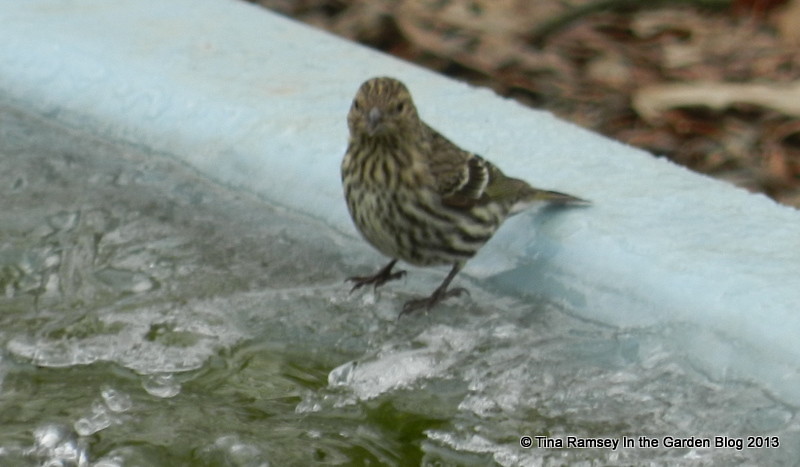
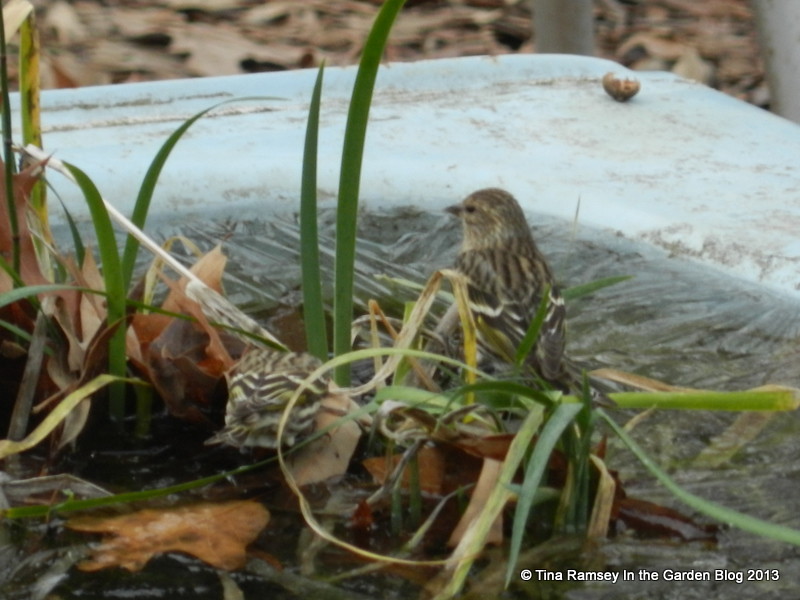
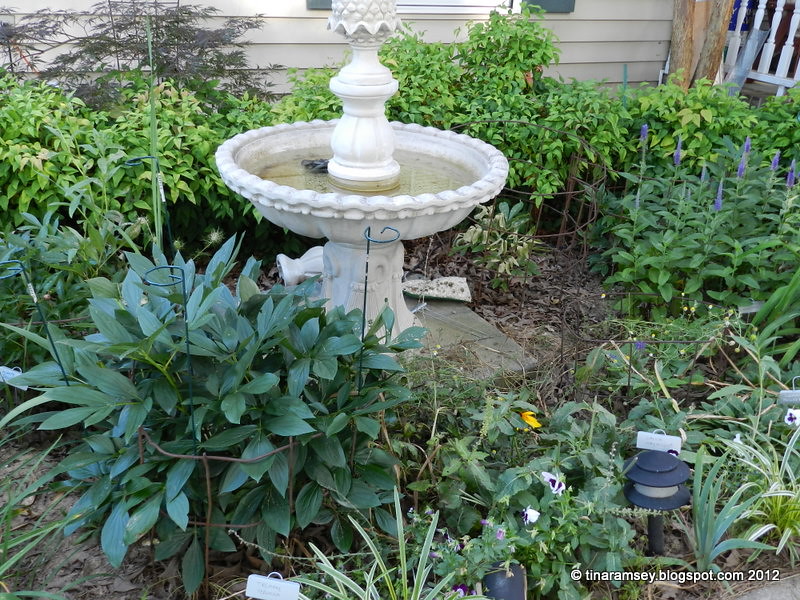
Keeping your birdbaths free of ice in the winter time is a very big concern. As someone who loves to feed the birds I realize they must also drink so I had to figure out what do to with all my birdbaths and small water features. I think I have it all figured out and thought I'd share some tips-today after 20 degree temperatures and six inches plus of snow. Let's start with my front foundation bed garden. I have a small fountain located in the center of this bed. I like this fountain because not only do the birds drink from it, but my wonderful cat drinks from it too. She refuses to drink from water dishes (which I could never keep fluid in this cold) but loves this fountain all year. This fountain is about 4-6 inches deep and is larger than most birdbaths so it has been a challenge to keep fluid but I have a trick. I purchased a 'birdbath heater' from a local store (I think it was Rural King but most bird supply stores should have these small heaters). The cost was under $20. It works well to keep a portion of the fountain free of ice but some of the fountain will still freeze under normal winter conditions (as evidenced in the picture). Here is the trick for keeping the entire fountain fluid during the recent arctic conditions we've been experiencing. Place a tarp over the whole fountain loosely. This keeps in the heat from the small birdbath heater in and then the whole fountain is free of ice. It worked great even in sub-zero temperatures. The cat and birds have been happy drinking from this fountain.
Next we'll move to my small bathtub pond. I have goldfish in this pond year round so I find it important to not only keep a bit of the surface free of ice for the birds, but also for the fish so they can get oxygen. My little pond holds about 35 gallons of water and is not more than 15" deep. A birdbath heater would simply not work. Instead I purchased a stock tank heater from Rural King (love this store!). It works wonderfully as you can see. There is not one speck of ice in this pond. I only use the stock tank heater when it looks as though the entire pond will freeze over (as in arctic blasts). Usually the running pump keeps an area in the pond free of ice but when temperatures below 20 degrees are sustained and winds are brisk, the bathtub will need extra help. In the opening picture the bathtub pond needs no extra help because the 6" of snow are serving as an insulator and the pump is keeping an area free for the fish. I think the stock tank heater would work for larger ponds too. Experimenting is the best way to find out what works best in your particular water feature. Birds of all sorts flock to this pond to drink as do the pesky squirrels and chipmunks. I have one particular mockingbird that loves to sit in the pot (not pictured) and drink from the pond. It will stay there a long time almost like it is savoring the water. It's such an enjoyable thing to watch birds in the winter.
And one last picture. I don't leave all of my birdbaths/water features up to operate during the winters. This is a cement bird bath out front. I covered it with plastic left over from a mattress. If you ever buy something very large like a mattress-save the cardboard and plastic for use in the garden. They work great in a number of ways. Plastic can be used like a tarp to haul things like leaves, and also to cover birdbaths. Cardboard can be used as a mulch under leaves. I sure hope no one looks under my mulch-no telling what they might find there.
Any tips for keeping water from freezing in the winter?
in the garden....
Words and Photos Property of In the Garden Blog Team,
In the Garden
I wish all Veterans a great Veteran's Day today. Especially the servicemen and women returning to Fort Campbell from overseas after a long tour of duty. Enjoy a bit of serenity and water in your lives today, before you have to begin doing this again. 

in the garden....grateful I no longer have to ruckmarch the six miles to the turn around point and back again to the start point.




 We had some major rains during the month of December. Just look at the small waterfall we had coming from next door!


