Showing posts with label Wildflower/Native Wednesday. Show all posts

Wednesday, June 26, 2013

Pale Coneflowers in Their Glory Alongside a Kentucky Road


DSCN7534
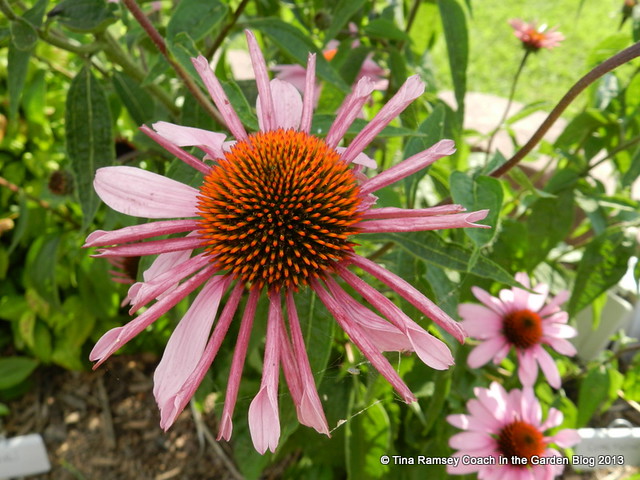
 Echinacea purpurea hybrid
Just about everyone who has ever picked up a trowel knows what a coneflower looks like and most likely even grows some coneflowers or has grown them. The familiar purple coneflower (Echinacea purpurea) is a big butterfly draw and is such a nice drought tolerant plant with tons of blooms in the summer that one simply cannot help but to grow them.
DSCN7519
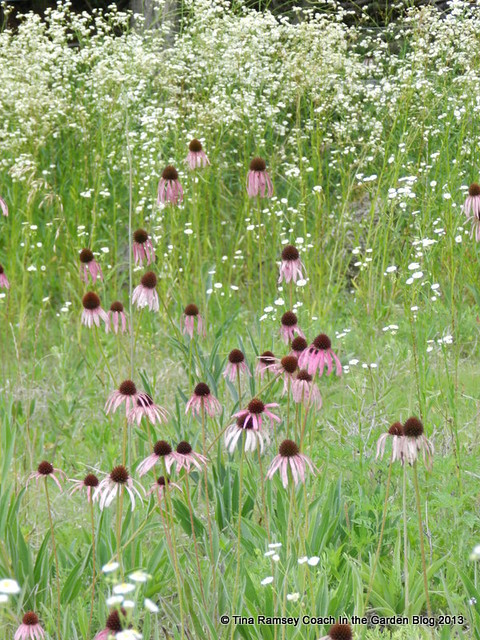
 This post is about coneflowers but not the familiar one we all know that you saw in the first picture; no, this post is about the pale coneflower, Echinacea pallida. All pictures after the first one are of the pale coneflower. There are several differences between the purple and pale coneflowers that include not only their looks but how they grow. 
DSCN7517
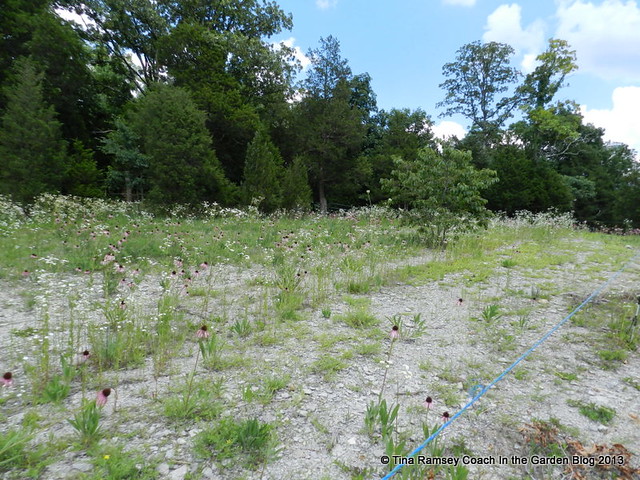
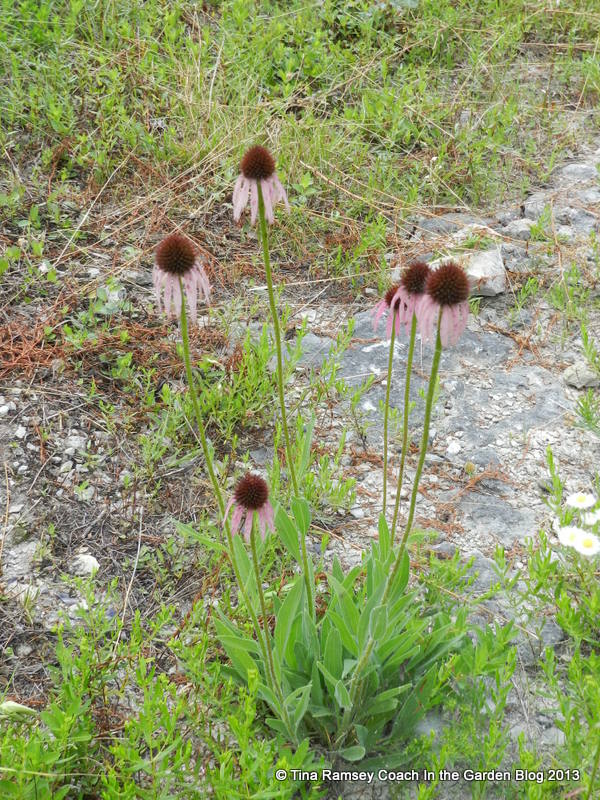
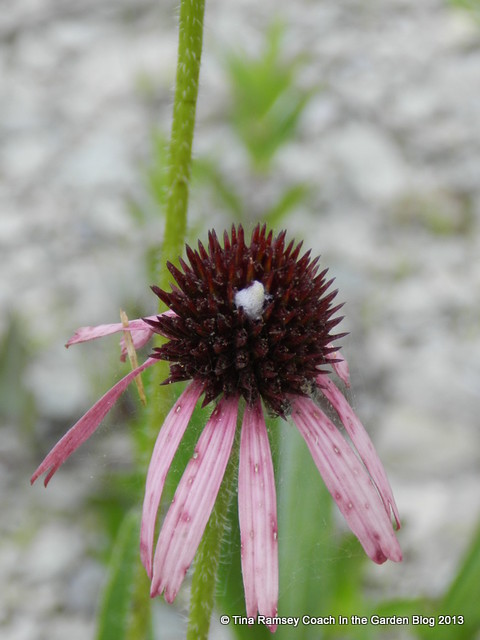
The pale coneflower is quite different from the normal purple coneflower in that its petals reflex down, it has a rather large taproot, and its foliage is clustered mostly at the base of the plant. The pale coneflower is also quite a hairy coneflower. Also, this coneflower is a protected species in many states due to the fact that many plant collectors have over harvested wild stands of this coneflower for the roots; which are used in herbal medicines. If you look closely at the second picture of this post you might notice someone (most likely the property owner) has installed a blue rope fence to protect the pale coneflowers from would be collectors of this treasure on the side of a Kentucky country road.
DSCN7518
I have never seen these growing in the wild but I happen to have an awesomely knowledgeable gardening friend who is quite well acquainted with the local area and this particular stand of pale coneflowers. It was about six years ago Sandy mentioned to me this special place. I am most ashamed to say it has taken me all these years to finally get together with her to go and visit it just this past Wednesday.
DSCN7516
I don't personally grow pale coneflowers and honestly don't think they would grow well on my farm but I do have to appreciate these tough coneflowers growing in gravel with no care from a gardeners hand. I have read where these coneflowers, unlike the purple coneflowers, like tough conditions and can be found growing in glades, limestone outcrops, and other gravelly areas that have a high pH. The pH on my farm is very low so right there that tells me there is a red light for them to grow on the farm. I also think these coneflowers would be much harder to transplant than the purple coneflowers due to the very large taproot the pale coneflowers have. That very taproot is what allows this coneflower to be very drought tolerant. Drought tolerance is a trait both pale and purple coneflowers do share.
DSCN7513
These are native coneflowers and are very beautiful when found growing in the wild. Just look at how perfectly they photograph with what I believe to be some type of erigeron. I so enjoyed my outing with Sandy and was quite impressed with these lovely native wildflowers....

in the garden...
Words and Photos Property of In the Garden Blog Team, In the Garden

Wednesday, September 22, 2010

Touch Me Nots in the Morning In Tiger Gardens

From In the Garden


Touch me nots are a most favored plant of mine in my garden. It is one plant I will not garden without and that is probably pretty funny because many gardeners might say it is a plant they would never grow in their garden. Touch me nots also happen to be a native wildflower so I am knocking out two birds with one stone this Wednesday-highlighting a favorite wildflower and sharing in Wildflower Wednesday, a creation of Gail at Clay and Limestone.

I have been growing touch me nots (Impatiens capensis) in my garden since 2003. Some years are much better than others but still the touch me nots grow and come back each year. They require only a semi shady moist spot in my garden-and room to spread. You see, the reason for the common name of Touch me not is because when you touch a seedpod it explodes-quite unexpectedly too. Those exploding seed capsules can spread seed far and wide and the location can increase exponentially in good years. This year has been a so so year. Not only have we had a drought but I have a very feisty dog who trampled most of my stand of the plants. A few plants that survived the trampling are growing through a four foot tall chain link fence and are doing well. They and their seeds will ensure I have some plants for next year.

Touch me nots are hummingbird magnets and make a bright and cheery show that dazzles in the morning light. I did not even notice the dew drops on these touch me nots when I snapped the photo....

in the garden....

Words and Photos Property of In the Garden Blog Team,

In the Garden

Monday, August 30, 2010

Wood Lily

Posted by: Dawn

I'm glad Tina has posted many of her wildflowers for Wildflower Wednesday, wildflowers are among my favorite spontaneous surprises in the world.

The three photos are of wood lilies that have decided to take up residence in my yard.

The wood lily (Lillium philadelphicum) is also known as; Philadelphia lily, prairie lily and western red lily, they are native to North America. This flower is recognized by it's unique open petals and the ability for the gardener to see through it by the spaces at the bottom of each petals. The wood lily can be between 1 ft and 3 feet tall, it has whorled leaves and will grow in most all conditions (shady, part shade and full sun). It prefers well rotted soil that is dry. They seem to have popped up wherever they want to, germinating by airborne seeds although it has a rough pineapple looking bulb. The wood lily is endangered in Maryland, New Mexico, Tennessee, and North Carolina. They are threatened in Kentucky and Ohio. It is featured on the Saskatchewan flag and is protected against uprooting, picked or destroyed. It grows along edges of woodland forests but this one likes my group of phlox.

The Indians used this lily as a boiled paste, for application on sores, bruises and swelling wounds. They used it as a tea for stomach problems.

This wildflower blooms from July (about the 4th) to August. It almost seems to me that the blooms last for about 2 weeks.


Pretty flower, In the Garden

Words and Photos Property of In the Garden Blog Team

Wednesday, August 25, 2010

Wildflower Wednesday: Heartleaved Asters and Perennial Ageratum

From In the Garden
This month I will spotlight two native wildflowers that grow in my garden. I am including them both because they grow next to one another and because they are both blooming now! The two are heart leaved aster, aka woodland aster, (Symphyotrichum cordifolium aka Aster cordifolius) and the other is perennial ageratum (Conoclinium (Eupatorium) coelestinum). Both of these plants are in the aster family so it makes sense they bloom at the same time-late summer to fall.

From In the Garden

I grow these two in part shade in a moist area of my greenhouse garden. This garden is transitioning to a woodland/native garden due to the limited sun it receives. So far it has been an easy transition but once I am finished with some major rehabbing we shall see how it all works out.

I planted both of these natives last fall. So far this year they've not received any supplemental watering, though they did wilt quite a bit; especially the ageratum. I have been most happy with the ageratum but not as pleased with the woodland aster. The woodland aster flops much more than I'd like it to but perhaps it is more of a groundcover than an upright perennial or perhaps it is not getting enough sun. I'm not sure but as long as it blooms it is a keeper in my garden. I like these plants so I intend to spread them around a bit more.

There are many more great natives blooming or getting ready to bloom soon but my garden is kind of in between blooming periods. We have the detritus of the summer garden (daylilies, coneflowers, brown eyes, etc) and the lush foliage of blooms yet to come (pineapple sage, anemones, asters, and mums) so I am happy to have these two native wildflowers blooming as a bridge between peak periods here at Tiger Gardens.

See Gail for more Wildflower Wednesday posts....

in the garden....


Skeeter is out of the net for a while and will be back as soon as she is able.


Words and Photos Property of In the Garden Blog Team,

In the Garden

Wednesday, July 28, 2010

Wildflower/Native Wednesday-Coneflowers

From In the Garden

CONFLOWERS with three special friends.


From In the Garden
This month's Wildflower Wednesday (brought to you by Gail) is going to spotlight the purple coneflower. It is a perfect month to spotlight this wonderful easy care, butterfly magnet, native flower because purple coneflowers are at their peak this month. The purple coneflower is a showstopping flower while in bloom but the show continues almost all year long even when the coneflower is not in bloom. The seedheads are spectacular for several months after the bloom has passed and help to feed American finches during the winter. One of the great benefits of natives, IMHO, is that they provide food and other benefits for the native fauna, such as butterflies and birds and bees and so on. Coneflowers fill the bill easily with their all around goodness.

From In the Garden
The butterflies visiting the garden and in particular these coneflowers were simply delightful and I think I could almost sit outside and watch them all day. If only daily living did not call I just might move a recliner to the garden!

From In the Garden

This particular photo is of some coneflowers in my front foundation gardens. They are doing really well in the front foundation gardens and I love the cottagey look of them. It is a good spot for these coneflowers because the front borders receive the eastern and southern sun and sun is pretty important for coneflowers. I do admit, coneflowers do okay in the shade but never reach their full potential unless grown in full sun.

From In the Garden

Coneflowers grow to about 2-4 feet tall and can form clumps as wide. Butterflies are attracted to them in a big way. After the bloom time is past, the flowers dry right on the stalks.
Deadheading coneflowers will not result in another bloom such as you get with salvias and catmint. I leave mine up nearly all winter for the finches to dine off from. They will really pick them clean too. You need do nothing to have some seeds fall off and sprout right in your garden, but if you'd like, you can cut the heads after they are mature and spread them around the garden. I think I'd do this in the fall but it would work in the spring too.

There are other than purple coneflowers and of the purples there are several varieties. I like them all but am particular to the purple (Magnus) and white ones (White Swan) since I find they are easiest to grow....

in the garden....

Wednesday, June 23, 2010

Wildflower/Native Wednesday-Phlox Paniculata


From In the Garden

It's that time of the month-Wildflower/Native Wednesday. For more posts on this subject see Gail at Clay and Limestone. I am highlighting tall garden phlox (Phlox paniculata) in this month's post. While phlox is probably not considered a wildflower it is surely a plant native to America. Not only is tall garden phlox native to most of the United States, it is a queen in the summer garden and this time of the year is when it shines most brightly.

The cultivar pictured above is a new kind of phlox commonly called 'Spinners' (Patent PP 17380). The Spinners phlox is very resistant to mildew, a definite bonus in our humid summers here in the south. In the year it has been growing here it has shown no issues whatsoever. I have even moved it a few times this season and still it is doing well.

From In the Garden

I grow several cultivars here at Tiger Gardens. My favorite ones are the ones that do NOT get mildew. In addition to the Spinners phlox (very reminiscent of peppermint candy) another mildew resistant phlox growing here is 'Flame White'. Flame White is a dwarf garden phlox and quite a stunner in its own right. It is a Proven Winners selection and rightly so because it is a winner here.

From In the Garden


I also grow 'Starfire', 'David', a white phlox, and an unknown light purple phlox; which gets mildew in a big way. Grrrr! I have not been pleased with David or the unknown purple. Starfire could do better in my opinion but as long as it blooms and does not get mildew it is a keeper here.

From In the Garden

A very new addition to the phlox repertoire here is 'Nicky'. Nicky is a stunner! While it is not as tall as I'd like it to be I believe it will be a bit taller next year. I have read that 'Nicky' is mildew resistant but since it is so new I am not sure yet-but just look at that color! It is reputed to be the darkest purple of all phloxes. I personally like the deeply hued summertime perennials such as red and orange daylilies rather than pastels. Pastels just tend to get washed out in our hot sun here in the summer. Nicky is a perfect summertime perennial with her deep color.

Tall garden phloxes do well in full to part sun, the more sun the better, and rich clay soil. In my experience they will require some additional watering during particularly hot and dry summers. I don't do anything special to my phlox except perhaps add some compost and bonemeal once in a while to the soil. Phlox are heavy feeders and do require good soil. I have read where some gardeners cut their phlox back in order to keep the phlox shorter and blooming in a bigger way, but I do not cut my phlox back though I do deadhead. I have never sprayed for fungal diseases but I may just begin and see how that goes on my older phloxes. I do think it is wise to buy the newer cultivars because with the newer ones I have I have had no issues with mildew whatsoever.

Now a question for you, who knew tall garden phlox was a native American wildflower and what is your favorite cultivar....

in the garden....?


Words and Photos Property of In the Garden Blog Team,

In the Garden

Wednesday, May 26, 2010

Wildflower/Native Wednesday-Tradescantia

From In the Garden

This month's Wildflower Wednesday (brought to you by Gail of Clay and Limestone)Tradescantia virginiana. This native wildflower is a favorite of mine because it thrives in woodland conditions. I have a lot of woods here and a lot of shade. Thanks goodness for these sweet little spiderworts!

Spiderworts come in all shades of pink, purple, and blue. I grow all the colors and I think they tend to hybridize freely so I never know what kind of mix I am going to get. I also have a special cultivar called 'Sweet Kate'. This little spiderwort has chartreuse foliage with a dark blue flower. It has grown in my garden for five years and I've never found seedlings of it-though they'd be welcomed.

Spiderworts can grow to a height of one foot to three or more feet. I have a big mix of them here and enjoy them all. Some are squat, some are tall and gangly, but all are easy care perennials that return each year without fail.

An interesting note is spiderwort is named after John Tradescant. Tradescant was a famous plant collector who helped to introduce many native North American plants to Great Britain and Europe.

Do you grow spiderwort....

in the garden....


Words and Photos Property of In the Garden Blog Team,
In the Garden

Wednesday, April 28, 2010

Wildflower Wednesday

From In the Garden


Instead of highlighting just one wildflower in my garden, I thought I'd try to get snapshots of several of the natives/wildflowers in my garden as they bloom during this month. Spring seems to be the best time for wildflowers so here goes with some wildflowers growing in Tiger Gardens. The first picture highlights Two Winged Silverbell (Halesia diptera 'Magniflora'). It is a new addition just this past fall. I purchased it from GroWild in Fairview and really did not expect it to bloom this spring. I am overjoyed it is blooming and doing well. Note the striped bark, an interesting feature of these trees. In addition to the two winged silverbell and bloodroot I showcased last month here are a few other natives/wildflowers blooming in my gardens...Phlox divaricata 'May Breeze', aka Woodland Phlox, also blooming is a purple variety. I love these more than any other wildflower in my garden! The fragrance, ease of growth and big show they put on more than earn their keep.

Waterleaf (
Hydrophyllum virginianum). I had an awful hard time identifying this wildflower. The rosettes of leaves are somewhat variegated when the plant is young. These leaves completely change when the plant is ready to bloom. It was not until it bloomed that I could figure it out. I enjoy this plant as it is a survivor. It grows well with the bloodroot and trout lilies.

Sweet Shrub (Calycanthus floridus)

Crested Iris 'Tennessee White' (Iris cristata 'Tennessee White')

Woodland Phlox (Phlox divaricata)

Leucothoe 'Rainbow' (Leucothoe fontanesiana 'Rainbow')

Green and Gold (Chrsyogonum virginianum)

Mayapples (Podophylum peltatum)

Variegated Solomon's Seal (Polygonatum odoratum var. thunbergii)

Wild Ginger (Asarum canadense)

Native Columbine (Columbine canadense)

Pussytoes (Antennaria ?)

Trillium (Trillium grandiflorum)

Virginia Bluebells (Mertensia virginica)

Trillium (Trillium sessile?)

Please join Gail at Clay and Limestone for more Wildflower Wednesday posts.

I will also be posting wildflowers this Friday to showcase some wildflowers located at Clarksville Base, Fort Campbell, Kentucky....

in the garden....


Words and Photos Property of In the Garden Blog Team,

In the Garden


Wednesday, March 24, 2010

Wildflower Wednesday-Bloodroot

From In the Garden


Thank goodness I have a (as in ONE flower) wildflower blooming otherwise you all would have had to look at the starts of wildings in the garden (my backup plan). I'd have to make sure all I showed were natives which is not an easy thing to do and you all really didn't want to look at plants without flowers did you? Good thing we have a bloom.

The pretty little flower pictured above is Bloodroot, aka Sanquinarea canadensis. I actually thought it was cutleaf toothwort but could not find a flower named toothwort that looked like this one. Then the light came on and I could see the foliage better and see that it is clearly bloodroot. In my defense the bloodroot has been here for one year and is just now showing up. The foliage on this clump was not particularly striking but it is there. Hence the confusion with my flowers. (Okay, I am learning, albeit slowly).

I planted the bloodroot in an area that resembles its native area in that it is in shade, on a slight hill with good drainage, and the soil has lots of organic matter. I am slowly adding more native wildflowers to this area and even though it is in the back 40, it is an area I find myself walking to quite a bit lately. This bloodroot has been here for one year and did go dormant last summer. I had forgotten all about it until I saw it sprouting up just a week or so ago.

I watched this one lone flower stem until about 2 pm yesterday when it gifted me with the bloom. Whew! There are lots of flowers blooming here but none, much to my dismay, can be considered true natives. Most flowers in bloom here at this time have naturalized but were at one point introduced (think pulmonaria, scilla, glory of the snow, crocuses and others) and I was adamant I could display a true native flower today. So my hat is off to the bloodroot for saving my day! There should be plenty more natives to choose from for next month's Wildflower Wednesday, a big relief for me and perhaps you too.

Join Gail at Clay and Limestone for more wildflowers....

in the garden....


Words and Photos Property of In the Garden Blog Team,

In the Garden