Showing posts with label Proven Winners. Show all posts

Wednesday, May 13, 2015

The Prairie-Rock Garden Update and Amsonia!


DSCN3011
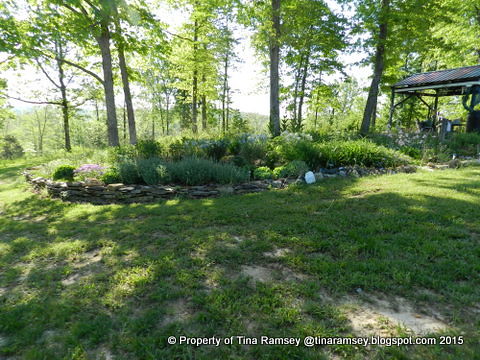
The oldest garden on our property is the garden I call the 'Prairie Garden', tho one might consider it a rock garden as well I suppose. Two years ago I claimed this particular spot for an oasis in a tick infested wild field. The little gazebo was built along with a patio then I set about thinking about a garden. Because one side slopes quite a bit and I had lots of rocks at my other house, I decided to build a small rock wall and back fill the area for a garden. These pictures were taken in the morning when the eastern sun was blocked by the shade trees but generally this garden gets full sun from late morning to the evening. I surmised tough plants that would make a big impact in this area were needed. I like native plant communities so I tried to pick prairie plants to grow in this garden. Finally, I can see the results of my hard work and my intuition paid off in my plant selections. This is a view from about 75 feet away. The house is actually over 100 feet away so individual plants would get lost. Therefore this garden has a limited palette of plants and they are primarily massed. Let's take a closer look.
DSCN3005
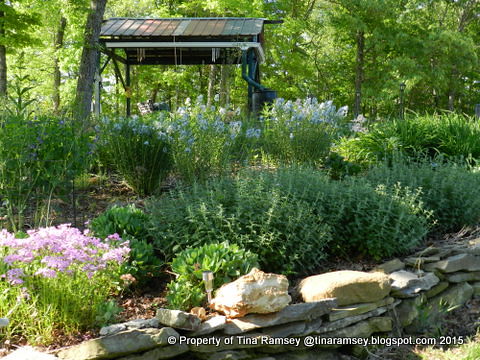
When you garden on a hill is makes sense to put taller plants in the lower area tiering to shorter plants as the hill rises. This is so you can see the whole garden and so that you don't feel like you are tipsy. Balance comes into play so that you can see the entire garden from any spot you chose to stand on so you must not only think of tall plants in the lower part of the hill but also you need to tier that part of the hill from a lower spot and not just from a high spot. The gazebo is the high spot in this garden and there are two sections of the garden. This northern side is complete. The southern side is not anywhere close. It was dug up for the electrical lines and will soon be dug up again for another line. My poor plants that I jumped the gun and planted on that side struggle. Looking to the south toward the gazebo we have wild phlox (it was not planted by my hands but I let it grow), catmint, baptisias behind the wild phlox, and amsonias behind the catmint. Groupings in this garden are no less than five to a group. Amsonias and baptisias are spaced at least four feet on center to allow for mature growth of these very large plants.
DSCN3006
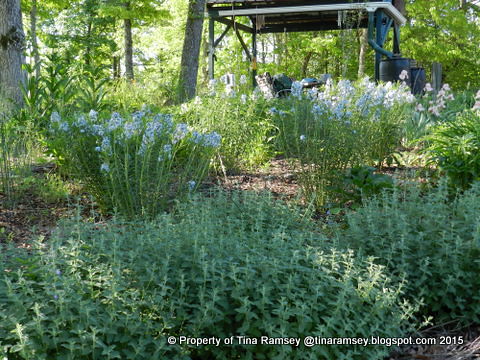
There is still space between the amsonias but remember these plants are only a few years old. They will continue to grow and soon this space will be gone. Catmint quickly fills in its allotted space with no problem.

DSCN3010
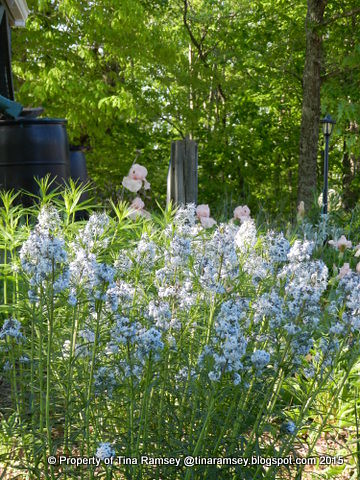
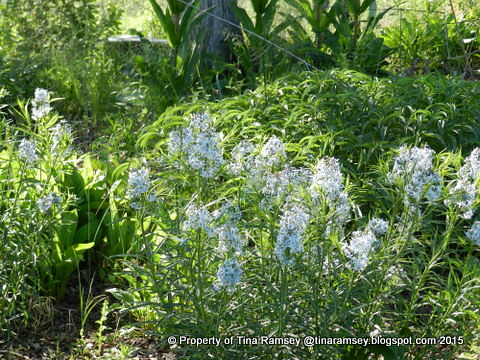
The amsonia is glorious this year. The blue is rather subtle but really makes an impact. In the background I planted some pink irises. The pink and blue are a great combination.
DSCN3008
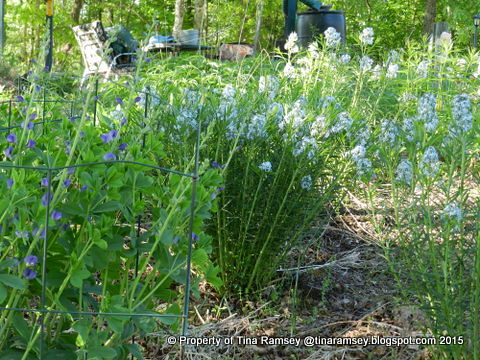
The blue of the baptisias play off from the blue of the amsonias. I am okay with all this blue but in hindsight a contrasting color might have stood out a bit more.
DSCN3013
More of the amsonias. Behind the amsonias are very tall plants and a native prairie plant called helianthus. These are small sunflowers and this cultivar is 'Maximillian'. The little cushion of it behind the amsonia will continue to grow to about four feet high (amsonia gets to about three feet) and will bloom beautiful yellow sunflowers in the late summer. I also planted Tatarian asters, cutleaf coneflowers, and 'Northwinds' switch grass alongside the helianthus. All are considered prairie plants.
DSCN3007
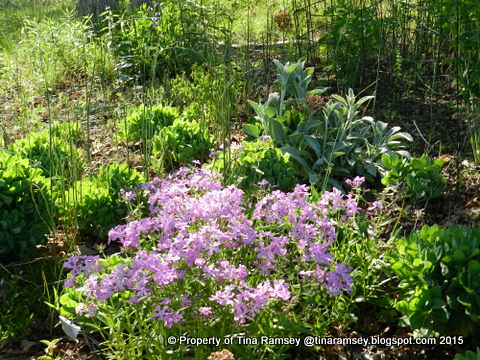
Here is a close up of the wild phlox. I did not plant this but it is perfect there. Behind and to the left of the phlox is 'Autumn Joy' sedum. So far the deer have not bothered this sedum in the two years it has been here. They did taste it but mainly leave it alone. The sedum was spectacular last summer and as a bonus the flowers dry on the plant and last all winter.
DSCN3014
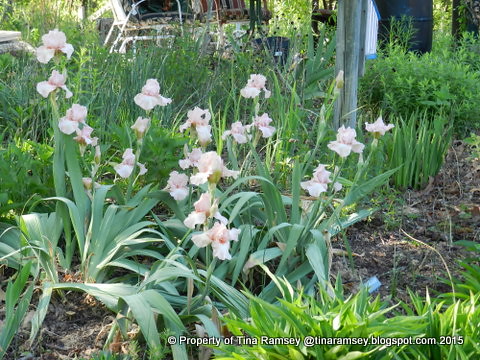
The pink irises like this spot. I just moved them here not too long ago but they still decided to bloom for me-that doesn't often happen after a transplant. Gladiolus and asters are in the background while 'Stella de oro' daylilies await their turn in front of the irises to shine with their yellow blooms.
DSCN3015
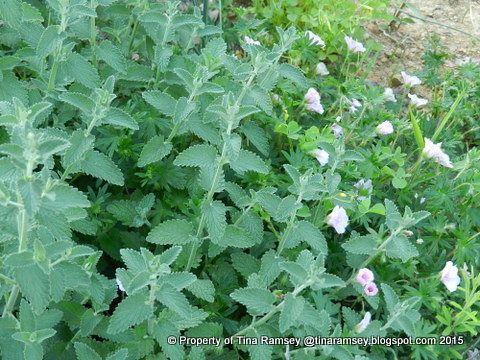
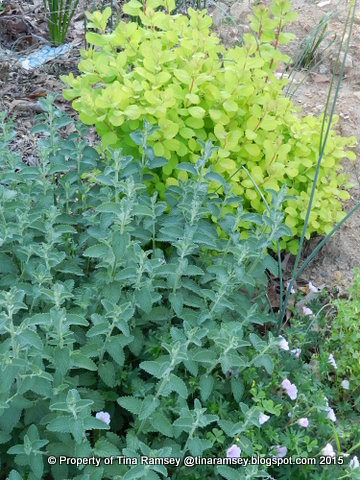
Changing gears a bit we jump over the southern part of this large garden on the other side of the gazebo. There is not much planted here because like I said, it has to be dug up for electrical lines. I did plop in some catmint and geraniums as well as 'Glow Girl' spirea. The textures and colors are nice together.
DSCN3016
I cannot say enough about 'Glow Girl' spiraea. Proven Winners sent me two plants two years ago and I planted them in this large garden. It is the only chartreuse in the garden but it holds its own. It is a rather slow growing spiraea and it appears it will stay smaller than most spiraea. The blooms stand out quite a bit and the plant is tough as nails. I am really loving this spiraea.

in the garden....

Also in this garden:  cup plant, tatarian asters, native butterfly weed (grown on its own), liatris, salvias, daylilies, coneflowers, Stokes aster, sedums, gladiolus and a few others that escape me right now. All tough plants. 

Words and Photos Property of In the Garden Blog Team, In the Garden

Monday, June 11, 2012

Proven Winners Cleome 'Senorita Blanca'


DSCN3162
Today's post is a review on 'Senorita Blanca' cleome and even though it is not yet for sale I have verified it should be for sale next year no problem. Normally I do not review plants or products until after a certain amount of time so I can be sure the plant or product is fairly good but this cleome has attracted so much attention in my gardens that I have decided to share it with you all now. This cleome rocks!
DSCN3159
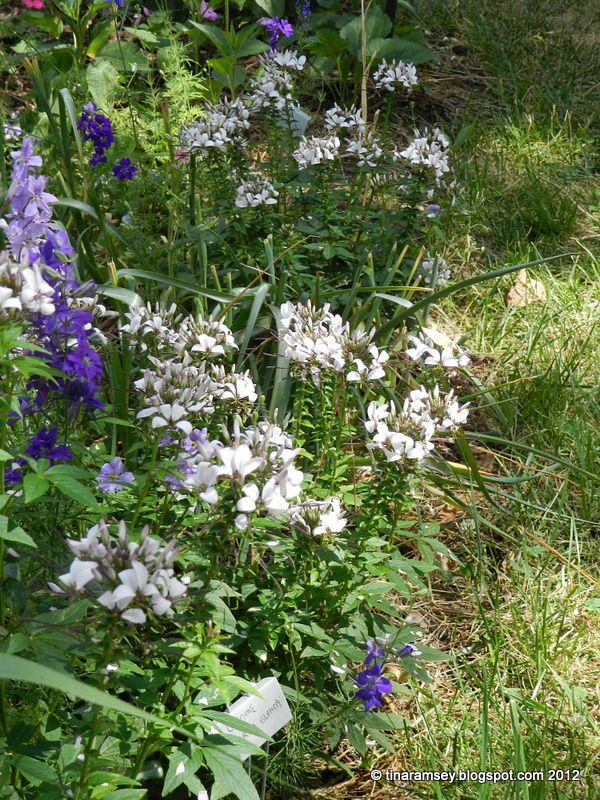
It almost doesn't even look like a cleome does it? This cleome is bred to not smell, and to not self seed everywhere, or grow thorns. So far since planting one month ago all of these virtues have shown themselves to be true with the added bonus of constant blooms without any special treatment. By special treatment I mean water. Here in my region of Tennessee we have only received scant rains this spring; which is not good for any newly planted plants but 'Senorita Blanca' does not seem to be bothered by the drought. This cleome is also excelling in the part sun conditions of my gardens. As you can see these three cleomes are planted in some shade. They do get a few hours of sun in the afternoon. I consider any sun loving plant-such as cleomes-that has proven itself to be shade tolerant to be a big plus for my gardens and this cleome fits the bill! The blue, and lavender plants alongside the cleomes are larkspur. They also appear to like the shade. 

I am mainly posting about 'Senorita Blanca' because it has been a big draw for visitors to Tiger Gardens. I have a lot of plants here so when I hear several comments from different people about one particular plant I sit up and take notice. 'Senorita Blanca' is the one!
DSCN3169
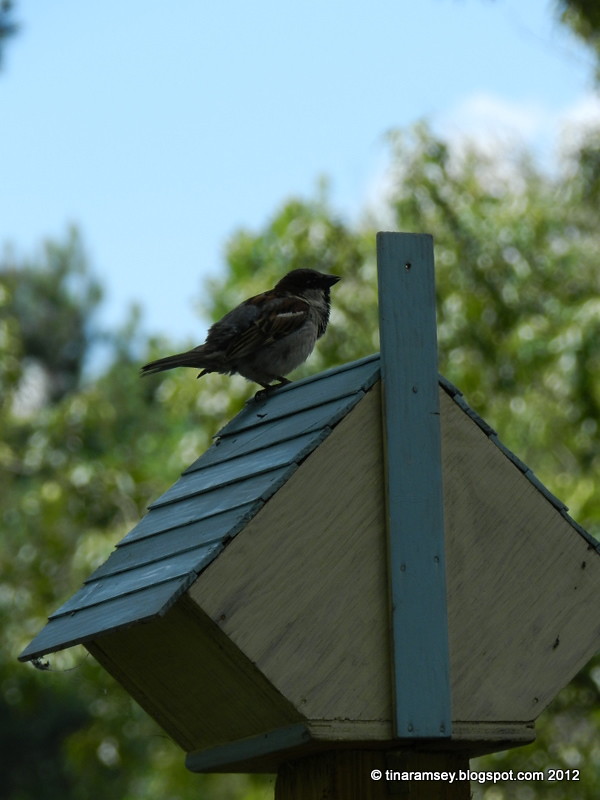
'Senorita Blanca' is in the new garden bed next to the pond patio. I also installed three 4 x 4's with birdhouses for interest in this area. I did not really expect birds to nest in the birdhouses but I have found birds to seize any opportunity they can to nest in a house. This male house sparrow has claimed one of the birdhouses for his own. It is something I will have to rectify as the sparrows will quickly take over all birdhouses here and will even kill other birds for the house. He is a pretty little bugger though isn't he? It's too bad they are such prolific and territorial birds otherwise they might be a fun bird to have around because they do not mind the company of humans at all. 

in the garden....

If you really like 'Senorita Blanca' and can't wait until next year you may be interested in its older sister 'Senorita Rosalita'. The only different between the two is the color. Blanca is white and Rosalita is a lavender/pink color. 

Don't forget to comment on my give a way post found here for a chance to win some garden owls.  

Words and Photos Property of In the Garden Blog Team, In the Garden

Monday, June 6, 2011

Oh Those Spireas! Proven Winners and More to Boot

100_2914

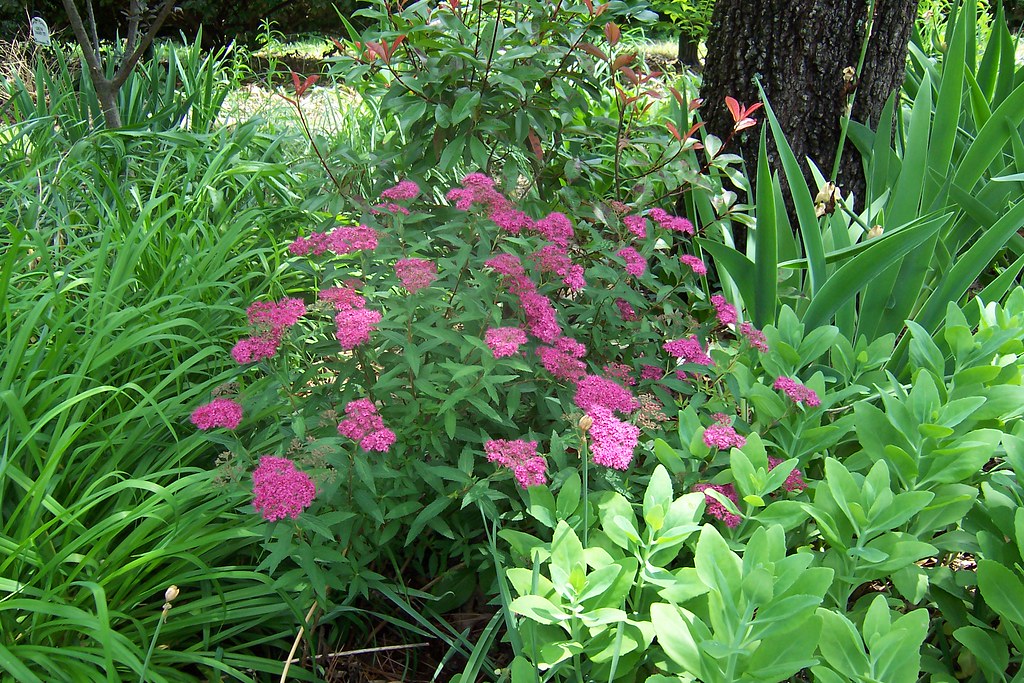
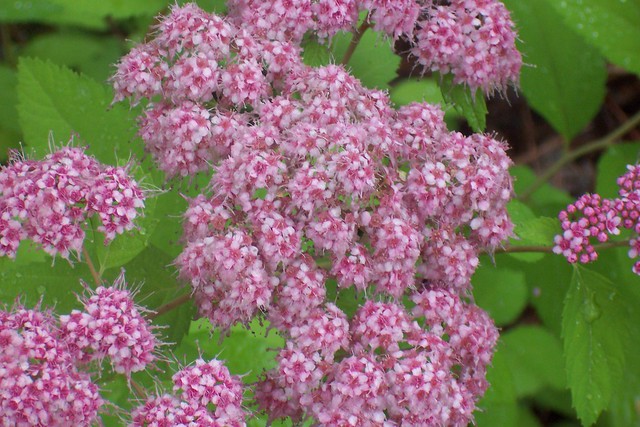
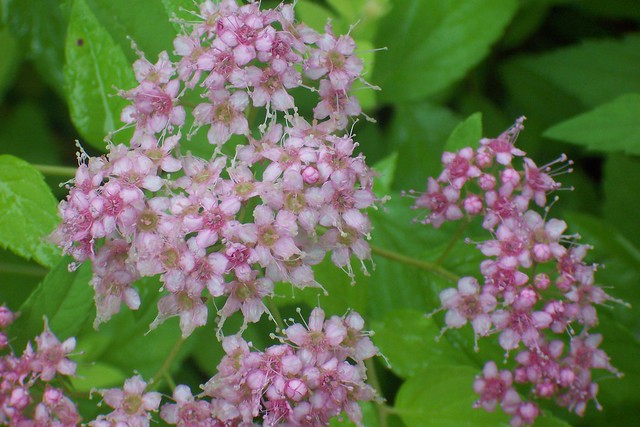
I love spireas! I feel awful guilty about saying that too. Terribly guilty. Spirea japonicas are listed as a significant threat by the Tennessee Exotic Plant Pest Plant Council. Significant threat means that  the plant possesses invasive characteristics; not presently considered to spread as easily into native plant communities as severe threat. This fact makes me watch my spireas closely for self seeding tendencies. My spireas have never self seeded in my garden but do tend to spread by rooting along the plant. That is a good thing for divisions but if a gardener is lazy the plants can take over a select area. Nonetheless, I love my spireas and will not garden without them. I've removed ALL other invasives on the TNEPPC list but am keeping the spireas. Can you see why?


100_2844
The spireas shine and are so easy to grow. They are not fazed by drought, floods, clay, sand, or anything else in the garden. They bloom on and off all season and even when the shrubs are bare of leaves in the winter the shrub provides structure in the form of dense twiggy growth. The growth of spireas is a perfect mounded shape that spreads to about four feet wide by three to four feet high. No trimming is needed but a good haircut in the early spring may help the spirea to push out more blooms. This was the first time I have given my spireas a haircut and they sure are rewarding me with lots of blooms.
100_2918
Spireas can be added in mixed borders or can be used as foundation plants. They are best used in my garden as weavers. That is they are the glue that ties together plantings. Their pillow form is a form that can fit in anywhere. Spireas are not fussy about conditions so using them in inhospitable spots is a bonus I take advantage of. I have spireas planted under trees, alongside a driveway, and in a shady border. All locations are diverse but work for the spireas.
100_2845


The blooms this year have been fabulous. I have several cultivars including: Double Play Big Bang, Goldmound, Little Princess, and Dart's Red. I also just received a shipment of Proven Winners plants to trial and advertise recently that included two new spireas. They are: 'Big Bang Gold' and 'Big Bang'. I am ever so excited to add them to my garden and they are tucked into good spots on either side of a Japanese kerria in my Secret Patio Garden. I'll be sure to let you know how they do but for now those spireas are simply spectacular.

100_3061

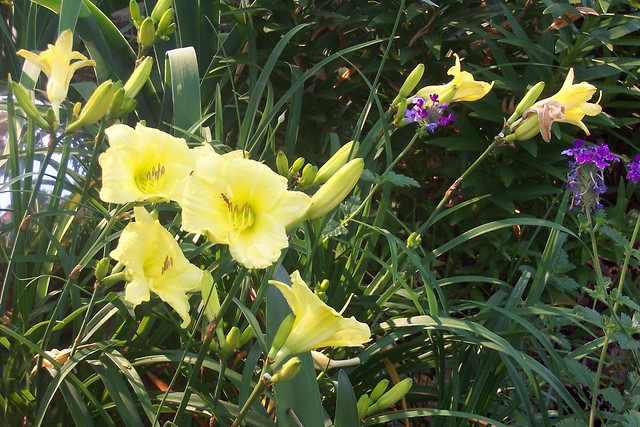
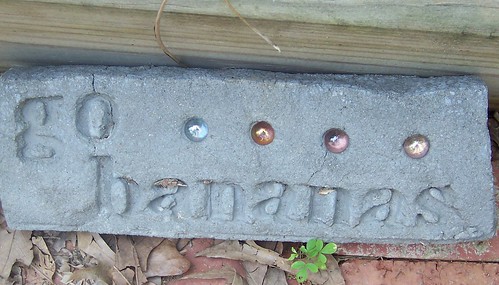
Also from Proven Winners are some daylilies called 'Going Bananas'. I already grew several of these daylilies in my garden but when my box arrived from Proven Winners it included another 'Going Bananas' daylily. I like this sunny diminutive daylily. It is a repeat bloomer and does well in my garden. The Proven Winners says this daylily "intermingles well with other plants" and I have to agree. I have it planted in my Front Sidewalk Garden right behind a 'Homestead' verbena. The yellow and purple combination rocks. Speaking of going bananas. At one time I grew some really REALLY tall hardy banana trees. This marker stone is a relic of those days and I thought it appropriate to include it in this post for you all to tie in with my Proven Winners daylilies.


100_3069


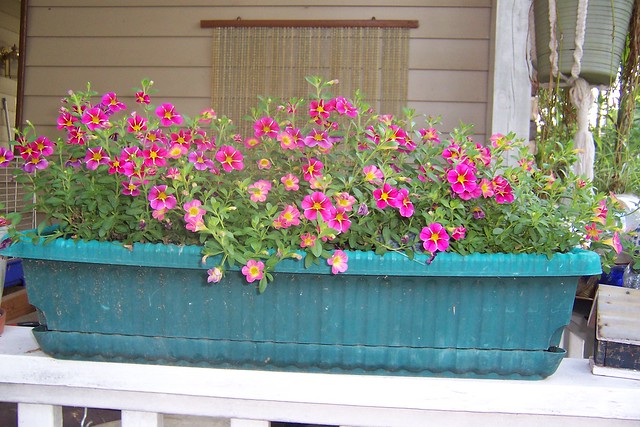
Another few lovely plants in my box from Proven Winners this spring were some calibrachoas (Superbells). The two varieties pictured here are Sweet Tart and Cherry Star.
100_3045
The 'Sweet Tart' superbells are the pink ones while the 'Cherry Star' ones are the bright red ones with the yellow star. I am not usually a container type person but decided to fill a few planter boxes with these Superbells. The superbells are doing great. I have another one in a hanging basket that only has the moss on the outside (allowing water to drain through quickly) and that one is doing just as well as these ones and I haven't even watered it! I received a few other plants from Proven Winners but will post on them at a later date.
100_3091


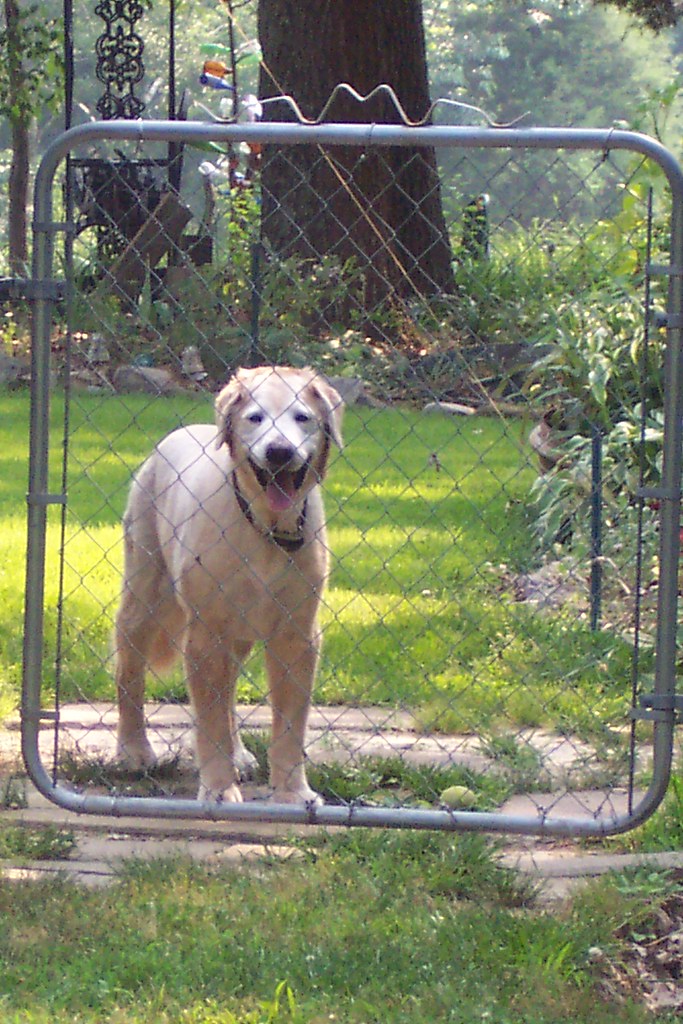
And one last picture is of my beautiful golden retriever/lab mix dog who came from our local shelter ten years ago. BJ is an old man now and feeling every single one of his years. Like me he creaks a bit when he walks and sometimes just doesn't want to get out of bed in the morning. Here he is looking at me longingly because he feels he should not be locked up. He is perfectly able to wander around with me in the front yard but the evil dog (Lady) feels that if BJ is able to wander around then so is she. She will jump over our four foot tall chain link fence and leap high hurdles to follow BJ. So my poor BJ is relegated to the backyard when Lady is outside. BJ has been on my mind lately because he has a bad urinary tract infection and prostatitis. Poor guy. We are getting him better though. Note the ball right next to him on the ground? BJ is of course my avatar picture on my profile. He and I share many of the same traits and I find him to be a great friend so I borrow his picture for this part of my world in blogging....


in the garden....

One last announcement for my local readers. The Tennessee Yards Done Right workshop is scheduled for this Saturday. Call Karla Kean at 9316485725 to register.

Note: I had this post all ready to go and then last night the worst thing happened, the Ramsey's best friend and faithful companion for the past ten years, BJ, passed away suddenly. We are heartbroken and will miss him dearly. This last picture was taken the day before he died and shows him as he truly was-a beautiful and happy dog. 

I will be hit or miss on the computer as we grieve. We went through this last year with our dear dog Link so we know we will get through it but the pain is so real. The good part is that he did not suffer and all three of us were with him at the end. We are thankful for these small miracles to aid us in our daily lives because if we can see the good parts then perhaps the bad parts are not so devastating....

in the garden with my dear friend BJ.  

Words and Photos Property of In the Garden Blog Team, In the Garden

Wednesday, April 6, 2011

The Many Faces of Spirea Foliage and a New Proven Winners Spirea

100_2199

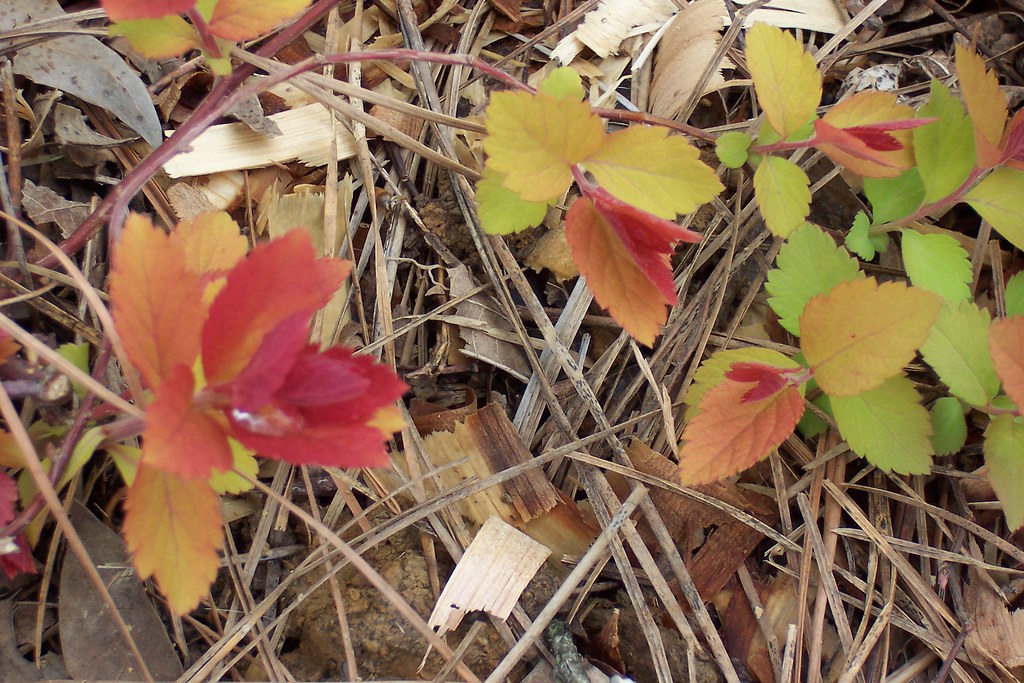
Do you like spireas? I love them. Yes I know they can be very aggressive and in some cases even downright invasive but I still like them and can't seem to remove them from my garden. In fact, I keep adding more. I just can't help it. Spireas are easy to grow and bloom all season. I also like them as substantial plants in a border or garden. I simply adore spireas and so far I haven't met one I don't like. Today I'll discuss a few of the lower growing mounded varieties in my gardens. These are generally known as 'bumalda' or 'japonica' spireas.

Last May I received a shipment from Proven Winners that included a 'Double Play Big Bang' spirea plant. Proven Winners sends some garden writers plants to trial and I was lucky enough to be on their list. It was like Christmas when the FedEx man pulled up with that box I tell you. While most of the plants in the box were annuals I was very excited to get this spirea. As I am wont to do I tend to grow the plant for at least one year before I post on it. I'd hate to post on a new plant only to have it later die. Well, that has not been the case with this 'Big Bang' spirea. The foliage (pictured above) tends to grab your eye. It is quite a stunner in the garden and came back admirably-even after having to suffer through the drought last summer and other indignities such as being moved at least once. I am really looking forward to seeing some blooms on it this year. To give you a good idea just how special this spirea is I thought I'd compare it to two other spireas I have growing in my garden.


100_2200


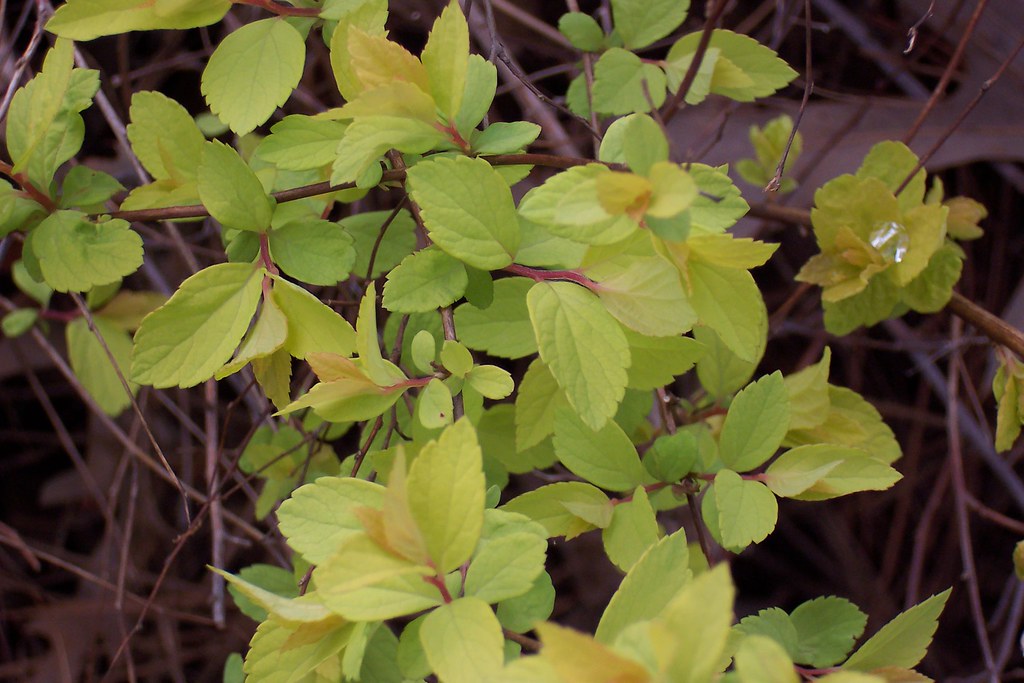
The first comparison is to the newly emerged foliage of 'Goldmound' spirea. This spirea foliage starts off a brilliant chartreuse/yellow color but will gradually darken to a green as the season progresses. It is a beautiful color and shines in the garden almost as much as 'Big Bang'.


100_2201


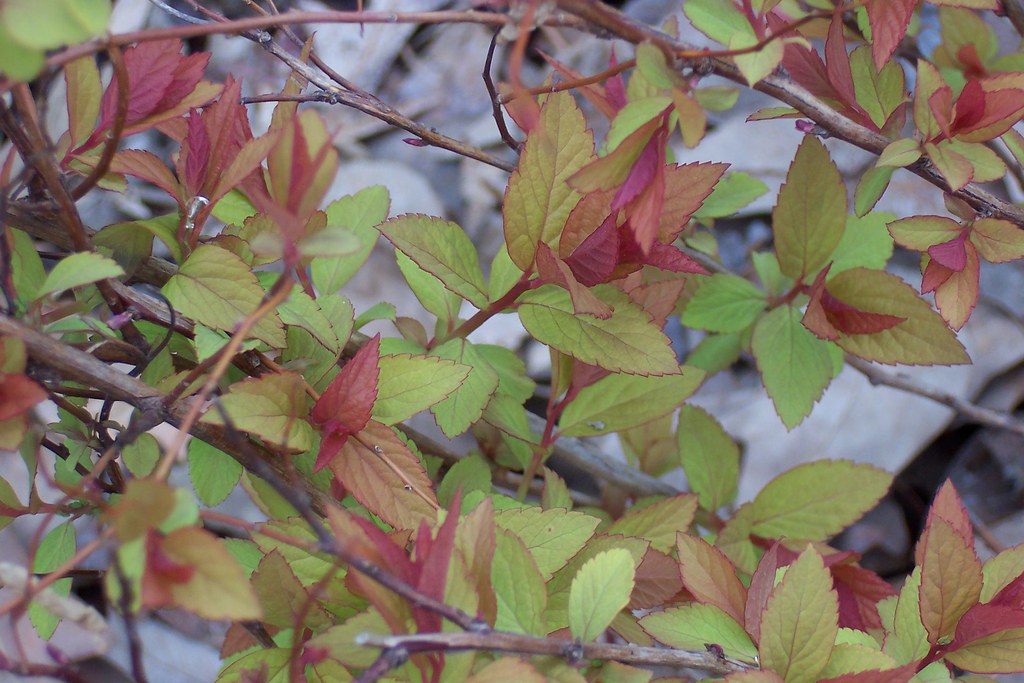
The last spirea I am showing you is 'Magic Carpet' spirea. This foliage is definitely an improvement over the 'Goldmound' spirea. The contrast between new and old growth is very nice being a somewhat dulled down version of the 'Big Bang' spirea. 

I tell you I really like all three spireas and it would be tough for me to pick a favorite but if I had to pick I'd choose the one that has the most wow power. For me that is the 'Big Bang' spirea....


in the garden....


Which one of the three spireas do you like the best???


Words and Photos Property of In the Garden Blog Team, In the Garden
Wednesday, November 10, 2010

Bloom Day-November 2010 and Greenhouse Talk

From In the Garden

One really fabulous thing about blogging is the blogger has both a pictorial and written record of her garden. I find myself going back to look at older posts more and more as the growing season wanes and we enter into a somewhat dreary period for the garden. The Bloom Day posts are such good posts to help to remind me of how the garden was and where it might need to go. Such was the case for me when prior to preparing this post I decided to look back at last November's post. Surprisingly I found that on the day I posted that post (November 15th) we had not yet had a hard freeze. That is not the case this year. Our first hard freeze came to my garden this past Saturday, November 6th. My garden is fairly well protected by a great overhang of tree leaves but even that was not enough to protect the tender plants. Most of my plants are gone and I'm ever so sad to see them go-especially the huge stand of pineapple sage I had growing by the vegetable garden (picture below is just to remind me of how it looked:( But! All is not lost because I have a greenhouse-more on that below. The freeze was well forecast ahead of the time and I was not only expecting it but I was prepared for it. All tender plants were moved into the house or the greenhouse, summer vegetables were cut back, cuttings for next year were safely tucked away, and the winter crop of flowers and vegetables have all been planted. Whew!

From In the Garden
So let's move on to what is blooming and how the garden is doing today shall we? The camellias are the stars of the show in my winter garden. Right now two of the fall blooming Camellia sasanquas are coming into full bloom. The butterflies (yes-there are some still around) and bees love these late blooming camellias, in addition to the asters and mums now blooming. The camellia pictured at the beginning of this post graces the north end of my deck. It is a double pink, and has been slow to grow but is finally filling out and getting large. We'll look at the queen camellia at the end of this post. I've posted about it many times but wanted to show the double today. As I look back at previous posts I found camellias were the Plant of the Month for November 2009. This year they have been slow to start and were set back by a hard freeze-but not stopped. They may yet be the Plant of the Month for November once I've evaluated all plants blooming this month.

From In the Garden
Mums are blooming wonderfully. Despite over two months of drought you just can't stop the mums. They had been a bit set back by the drought but quickly recovered once we received some rain. The yellow button mums along with some reds, purples and Sheffield mums are all in full bloom. This particular clump pictured used to be about 20' long by 4' feet wide but I had to finally thin them out because the stand was a bit boring. This mum is a mainstay here and I have it in all of my gardens. It does okay in shade and shines in sun conditions (where it can be found here such as in this garden).

Now we move to greenhouse flowers. I can tell already I will have tons of blooms all winter as long as I can keep my greenhouse going-that is the challenge since it is my first year. So far so good. I'll explain.

From In the Garden
Oxalis-sweet plant!

From In the Garden
Proven Winners 'Slightly Strawberry' mallow. This particular plant was part of a box of free plants provided by Proven Winners for me to trial and write about. Now that the growing season is over I feel comfortable talking about a few of the plants that came in my wonderful box of goodies this past spring. Being an in ground gardener more than a container gardener nearly all of my trial plants (not yet offered to the public except in limited quantities but these plants will be available in the Spring of 2011) went into the ground. I tell you this season was a pretty hard season for most of the plants due to the drought. I do not usually baby my annuals and the majority of the Proven Winners plants were annuals. Some did well and some did not do so well. 'Slightly Strawberry' did okay and survived the summer with no help from me. I have decided to see if it will winter over and plan to plant it out in the garden again next summer. I tell you I did not expect it to be so darned pretty! It simply adores the greenhouse conditions as you can see. It grows along side another Proven Winners introduction (not new to the market) called 'Diamond Frost'. Diamond Frost simply rocks and I would not garden without one or two in my garden so it too gets greenhouse treatment in the winter.

From In the Garden
Pineapple sage cuttings with duranta in the background. The huge 3-4 foot plants in the garden bit the dust during our hard freeze of November 6th but these babies are doing fabulous in the greenhouse.

I also winter over a few more plants in the greenhouse which are blooming but not pictured. They include impatiens and geraniums. Ferns, a few houseplants and some vegetables round out the greenhouse plants. I'll talk more of them later.

From In the Garden
I think it is only appropriate to talk of the greenhouse since it is such a big part of my garden now that the outdoor growing season has ended. I was extremely concerned about heating the greenhouse. I had read where ceramic heaters are good for greenhouses but the one I purchased for that very purpose did not work. It would cut off within two minutes and I had to be present in order to turn it back on. I was at a loss as to how I was going to heat the greenhouse then I looked around my garage and found a little 1500 watt radiant space heater (you can see it on the floor of the greenhouse in the above picture). It has done the job in flying spades! I have the exact setting where I want it and it cycles off and on all night keeping the greenhouse a toasty 45 degrees-my specified temperature. I chose 40-50 degrees for the temperature range of my greenhouse because that is the general range my unheated garage stays at during the entire winter. I've successfully wintered over plants in there for many years so I figure it should work for the greenhouse as well. This heater does not have a precise thermostat but fiddling with the heat dial was not difficult.

Can you see the rain barrel in the far left corner? This rain barrel is actually a repository for water I get from a garden hose. It makes watering all of the plants so much easier for me because the water source is right there. I simply fill up my watering can and water a way. Another benefit of having a rain barrel in the greenhouse is that it provides passive heating during the night. It is my theory the water and barrel heat up a bit during the warm days and when the sun goes down some of that heat is released back into the greenhouse. So far I can't tell if it works well or not but I think it does work, at least a little bit. Even when I don't run the heat in the greenhouse it generally stays about 7-10 degrees warmer than the outside temperature. Not bad!

One other extra thing I did to the greenhouse in preparation for the winter was to insulate better. I had done a lot of preparation in setting up the greenhouse back in March, but the Solexx panels are just not very thick and don't hold in heat well. Enter bubble wrap. I had read where many greenhouse hobbyists wrap their greenhouses with bubble wrap. I researched online and found a source that sold the large bubble wrap in four foot widths-a perfect width for me. I ordered it and taped it to the entire inside of the greenhouse-less the door. I had to tape the bubble wrap to the outside of the door due to it interfering with the opening and closing of the door if it was inside. Air is a really great insulator and I think the bubble wrap makes a huge difference with holding in the heat from the space heater. I am relieved the heater does not run all the time and so far, with low temperatures of below 30 degrees, the insulation and heating methods I have employed have worked. I am pretty glad too because I was seriously considering just putting the plants in the garage and not worrying about it. Mr. Fix-it and I both agreed this was not an option. I have a greenhouse so I must use it and I tell you it is better for me and the plants to be in the wonderful humid and warm environment of the greenhouse than to be in the dark and drafty garage. Had enough of greenhouse talk yet? I have so let's move on to one last camellia.....

From In the Garden
I believe this one is 'Jean May' (even if it isn't it is for me because my mother's name is Jean). It grows on the northern end of my home and is really really tall and large. It is simply splendid on this November Bloom Day....

in the garden....

Words and Photos Property of In the Garden Blog Team,

In the Garden